


Why Clean Eating Lunchboxes Matter
Preparing a clean eating lunchbox for work or school is less about rigid rules and more about building meals from minimally processed, nutrient-dense ingredients. These lunches generally prioritize whole grains, lean proteins, healthy fats, and plenty of vegetables and fruit, while limiting added sugars, refined starches, and ultra-processed snacks.
From a health perspective, this approach supports stable energy levels, better concentration, and fewer mid-afternoon crashes. Steady blood sugar from balanced meals can help improve focus in the classroom or at the office, while fiber-rich foods and lean protein support satiety throughout the day. In practical terms, clean eating lunches can also simplify decision-making; when your lunchbox is well planned, you are less likely to rely on vending machines or fast food.
Below are seven lunchbox ideas designed to travel well, assemble relatively quickly, and fit into a clean eating framework. Each can be adjusted to suit different dietary needs and flavor preferences.
Mediterranean Chickpea and Quinoa Salad
This cold salad is rich in plant-based protein, fiber, and heart-healthy fats. It holds up well in the fridge for several days, making it suitable for batch cooking on Sunday and portioning into containers for the week.
To assemble, combine cooked quinoa with canned chickpeas (rinsed and drained), cherry tomatoes, cucumber, red onion, and chopped fresh parsley. Add a handful of olives and a sprinkle of crumbled feta if you tolerate dairy. Dress with extra-virgin olive oil, lemon juice, and a pinch of sea salt and dried oregano.
For a balanced lunchbox, consider pairing this salad with a piece of fresh fruit and a small handful of raw nuts. The mix of complex carbohydrates, protein, and fat provides sustained energy, while the vegetables contribute vitamins, minerals, and antioxidants commonly associated with the Mediterranean dietary pattern.
- Make it dairy-free by skipping the feta or replacing it with diced avocado.
- Use tri-color quinoa or a blend of quinoa and brown rice for extra texture.
- Store dressing separately if you prefer to keep the vegetables very crisp.
Rainbow Veggie Wraps with Hummus
Wraps are an accessible way to pack a variety of vegetables into one portable meal. Using whole grain or sprouted grain tortillas keeps the base high in fiber and slower-digesting carbohydrates. Hummus serves as both a spread and a protein source, while providing healthy fats from chickpeas and tahini.
Spread a generous layer of hummus over the tortilla, then layer thinly sliced bell peppers, grated carrots, shredded purple cabbage, cucumber sticks, and baby spinach or arugula. Roll tightly and slice into halves or pinwheels for children’s lunchboxes.
The appealing appearance of layered colors can make raw vegetables more inviting, especially for younger eaters. This lunch targets a variety of phytonutrients from the different colored vegetables, supporting overall health and offering a refreshing crunch.
- For extra protein, add strips of grilled chicken, smoked tofu, or hard-boiled egg slices.
- Brush the inside of the tortilla lightly with lemon juice to prevent sogginess if preparing the night before.
- Serve with a small container of plain yogurt with berries to round out the meal.
Bento-Style Protein and Veggie Box
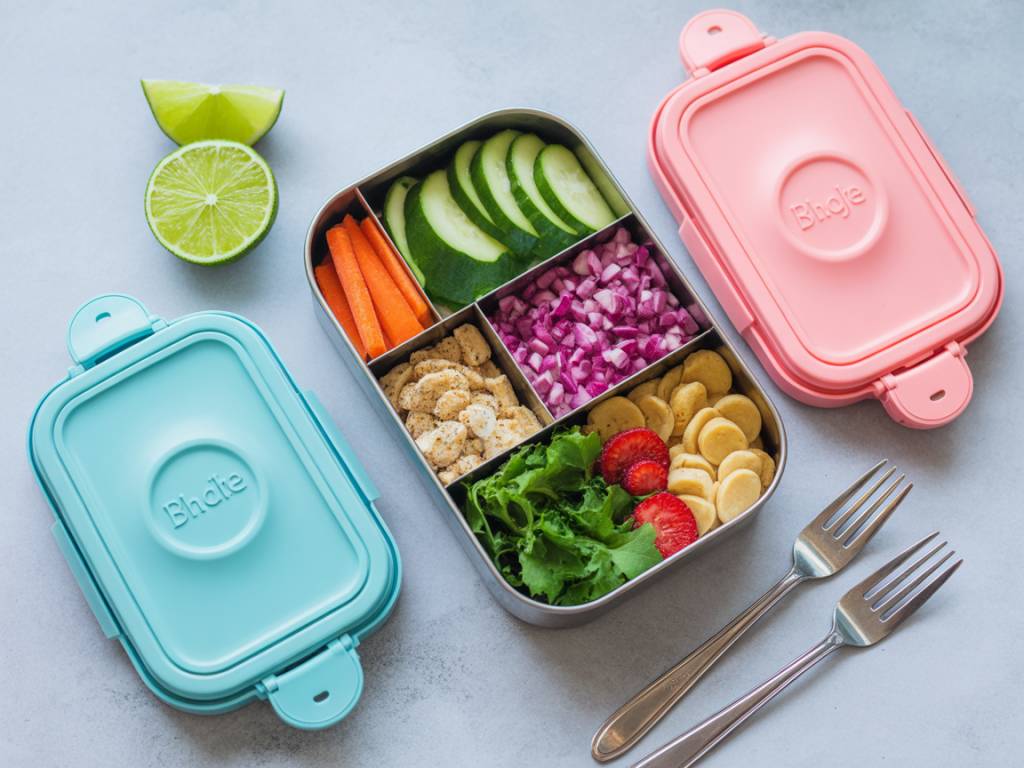
A bento-style box lets you assemble a meal from simple components rather than a single mixed dish. This approach is practical for families with different tastes, as you can vary each compartment while sticking to the same general structure: protein, vegetables, whole grains, and a small portion of healthy fats.
Start with a lean protein such as grilled chicken breast strips, baked salmon pieces, marinated tofu cubes, or hard-boiled eggs. Add raw vegetables like cherry tomatoes, cucumber rounds, sugar snap peas, or carrot sticks. Include a small serving of whole grains—such as brown rice, barley, or a few whole grain crackers—and finish with a source of healthy fat: a few olives, avocado slices, or a modest portion of nuts or seeds.
This modular format is particularly suited to those who prefer not to mix foods or who have sensory preferences. It also allows straightforward portion control and encourages a mindful, slower style of eating.
- Use silicone cups or small containers to keep wet and dry items separated.
- Include a small dip, such as plain Greek yogurt with herbs or a tahini-lemon sauce, to make raw vegetables more appealing.
- Rotate proteins and grains through the week to maintain variety without extra planning.
Lentil and Vegetable Soup in a Thermos
On cooler days, a warm lunch can be both satisfying and nourishing. Lentil soup is a classic clean eating choice: lentils provide plant-based protein, complex carbohydrates, and fiber, while vegetables add volume and an array of micronutrients.
Prepare a large pot with onions, celery, carrots, garlic, and tomatoes, then add dried lentils, vegetable or chicken broth, and herbs such as thyme, bay leaves, and parsley. Simmer until the lentils are tender. This type of soup tends to improve in flavor after a day in the fridge, making it ideal for reheating and packing in a thermos for work or school.
A thermos helps maintain food safety by keeping soup at a consistent temperature. Paired with a slice of whole grain bread and a piece of fruit, this lunch offers a combination of comfort and balanced nutrition, without relying on cream, excessive sodium, or highly processed ingredients.
- Use red lentils for a smoother, faster-cooking soup or green/brown lentils for more texture.
- Add leafy greens like spinach or kale near the end of cooking to increase the nutrient density.
- Batch-cook and freeze portions to simplify busy weeks.
Brown Rice Sushi Bowls
Sushi flavors can be translated into a deconstructed bowl that travels more easily and avoids the need for precise rolling. Using brown rice instead of white adds extra fiber and a slower release of energy, aligning with clean eating principles.
Fill a container with cooled cooked brown rice lightly seasoned with rice vinegar. Top with strips of cucumber, carrot, bell pepper, and avocado, along with cooked shrimp, grilled salmon, tofu, or edamame for protein. Sprinkle with toasted sesame seeds and sheets of nori cut into thin strips.
A small container of low-sodium tamari or soy sauce, optionally mixed with ginger and a touch of wasabi, completes the bowl. This lunchbox idea offers many of the sensory qualities of sushi—umami flavors, contrasting textures, and fresh ingredients—without the time and skill required for rolling.
- Prepare rice in advance and cool it quickly for food safety.
- Pack avocado separately and add just before eating to prevent browning.
- For a lighter option, replace some of the rice with shredded cabbage or lettuce.
Stuffed Sweet Potatoes with Greens and Beans
Sweet potatoes provide natural sweetness, complex carbohydrates, and beta-carotene. When paired with leafy greens and beans, they become the foundation of a hearty, plant-forward lunch that reheats well.
Roast several whole sweet potatoes in advance until tender, then store them in the refrigerator. For each lunchbox, slice one open and fill it with a mixture of sautéed greens (such as spinach, kale, or chard), black beans or white beans, and a spoonful of plain yogurt or a drizzle of tahini for creaminess. A sprinkle of smoked paprika or cumin adds depth of flavor without heavy sauces.
This combination offers a complete protein when beans and grains are both present across meals in the day, and it delivers a generous amount of fiber. It is also highly adaptable: the same basic method can be used with different beans, greens, and seasoning profiles.
- Reheat the stuffed potato at work or school if a microwave is available; if not, pack it warm in an insulated container.
- Add a side salad of raw vegetables to introduce more texture and freshness.
- Use small sweet potatoes for children or lighter appetites; larger ones may suffice as a standalone main course.
Greek Yogurt Parfait Power Lunch
While yogurt parfaits are often associated with breakfast, they can function as a balanced lunch when assembled thoughtfully. Greek yogurt provides substantial protein, and when combined with fruit, nuts, and seeds, it forms a meal that is both convenient and nutritionally dense.
Choose plain, unsweetened Greek yogurt as a base to avoid added sugars. Layer with fresh or frozen berries, sliced kiwi, or chopped apple. Add a small portion of unsweetened granola or rolled oats, plus nuts and seeds such as almonds, walnuts, chia, or pumpkin seeds. For extra flavor, use a light drizzle of honey or pure maple syrup, keeping the amount modest.
To maintain texture, pack crunchy elements in a separate container and mix them into the yogurt just before eating. This style of lunch suits those who prefer a lighter but protein-rich option and can be particularly practical for days when time and appetite are limited.
- Use a well-sealed jar or container to prevent spills in school bags or work satchels.
- Choose lactose-free yogurt or a high-protein plant-based alternative if needed for dietary reasons.
- Add a small side of sliced vegetables or a simple green salad to increase vegetable intake.
Practical Tips for Sustainable Clean Eating Lunches
Implementing clean eating lunches consistently is often less about complex recipes and more about systems. A few strategic habits can make it easier to maintain these patterns across busy weeks.
- Batch cooking and prepping: Cook grains, legumes, and proteins in larger quantities once or twice a week. Wash and chop sturdy vegetables like carrots, celery, and cabbage in advance.
- Thoughtful containers: Use divided containers, small jars for dressings, and a reliable thermos to keep foods at safe temperatures and preserve texture.
- Balanced structure: When in doubt, assemble each lunch using a simple formula: one source of protein, one whole grain or starchy vegetable, at least two types of non-starchy vegetables or fruit, and a small serving of healthy fats.
- Flexible substitutions: Swap ingredients based on what is seasonal, affordable, or already in your kitchen. Clean eating focuses more on the quality and balance of foods than on strict adherence to specific recipes.
- Involving children and colleagues: Allow children to choose between different vegetables or proteins during prep, and consider shared planning with coworkers to exchange ideas and avoid monotony.
Over time, these lunchbox patterns can become routine, providing reliable nourishment and helping to reduce reliance on highly processed convenience foods. The emphasis remains on whole, recognizable ingredients assembled in ways that are practical, satisfying, and suited to both school and workplace environments.