
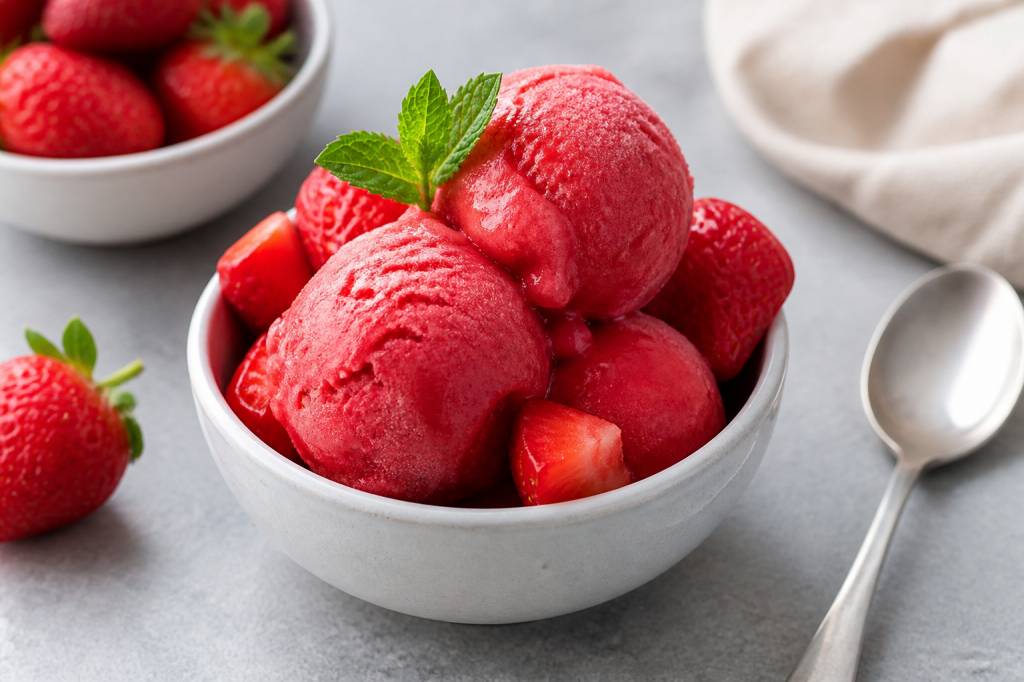
Strawberry sorbet: a refreshing and healthy homemade recipe
When strawberries are at their sweetest, there is no better way to enjoy them than in a simple homemade sorbet. This strawberry sorbet is bright, refreshing and naturally dairy-free, with a short ingredient list and no need for an ice cream maker. It is the kind of dessert that tastes indulgent while keeping things wonderfully uncomplicated.
Unlike many shop-bought frozen desserts, this recipe lets the strawberries do most of the work. Their natural sweetness, vibrant colour and gentle acidity create a beautifully balanced sorbet. All you need is ripe fruit, a little lemon juice and enough sweetness to keep the texture smooth rather than icy.
Whether you are looking for a lighter summer dessert, a way to use up a punnet of very ripe berries or a healthier alternative to traditional ice cream, this recipe is worth keeping close. It is also easy to adapt, making it useful for family meals, dinner parties and spontaneous visits to the freezer with a spoon.
Why homemade strawberry sorbet is worth making
Making sorbet at home gives you control over every ingredient. You can choose seasonal strawberries, adjust the sweetness to suit your taste and avoid unnecessary colours, flavourings and additives. The result is fresh, fragrant and much closer to the taste of real fruit.
Strawberries also bring useful nutritional benefits. They are naturally low in calories and provide vitamin C, fibre and a range of plant compounds. Of course, sorbet is still a sweet treat, but using whole fruit means that it offers more than just sweetness.
There is another advantage: homemade sorbet is remarkably flexible. You can serve it after a meal, blend it into a smoothie, spoon it over natural yoghurt or use a small scoop to add colour to a fruit salad. A batch can turn an ordinary dessert into something that feels special without requiring complicated techniques.
Ingredients for strawberry sorbet
This recipe makes approximately six servings. For the best flavour, use strawberries that are fully ripe and aromatic. Slightly soft berries are ideal, provided they are not mouldy or fermented.
- 700g ripe strawberries, hulled
- 100g caster sugar, or to taste
- 120ml water
- 2 tablespoons fresh lemon juice
- 1 teaspoon finely grated lemon zest, optional
- A few fresh mint leaves, optional, for serving
The sugar is not only there to sweeten the sorbet. It also helps create a softer, more scoopable texture by reducing the formation of large ice crystals. You can reduce the amount slightly if your strawberries are particularly sweet, but removing it completely may leave you with a very hard and icy dessert.
If you prefer, replace some or all of the caster sugar with a liquid sweetener such as honey or maple syrup. Honey adds a distinctive flavour, while maple syrup gives the sorbet a gentle caramel note. Keep in mind that these alternatives may slightly change the colour and texture.
Choosing the best strawberries
Fresh strawberries are the star ingredient, so shopping carefully makes a noticeable difference. Look for berries with a deep red colour, a fresh green leafy top and a strong strawberry fragrance. The fruit should feel plump rather than watery, with no bruised or leaking areas.
Size is less important than ripeness. Large strawberries can be impressive, but smaller seasonal berries often have a more concentrated flavour. If you are buying from a farmers’ market or a local farm shop, ask when the berries were picked. The freshest fruit often needs very little help to taste delicious.
Frozen strawberries can also work well, particularly when fresh berries are out of season. Choose frozen fruit without added sugar and allow it to thaw before blending. Frozen berries may contain more water than fresh ones, so you may need to adjust the sugar and lemon juice after tasting the purée.
How to make strawberry sorbet
Start by washing the strawberries gently under cool running water. Do this before removing the green tops, as hulled berries can absorb more water and lose some of their flavour. Pat them dry with a clean kitchen towel, then remove the leaves and slice the fruit in half.
Next, prepare a light sugar syrup. Add the water and sugar to a small saucepan and warm over a medium heat, stirring until the sugar has dissolved. There is no need to boil the mixture for a long time. Once it is clear, remove the pan from the heat and allow the syrup to cool for a few minutes.
Place the strawberries in a blender or food processor. Add the cooled syrup, lemon juice and lemon zest if using. Blend until smooth. The colour should be vivid and the texture should resemble a thick fruit purée.
Taste the mixture before freezing. This is an important step, not a suggestion. Strawberries vary significantly in sweetness, so the balance may need adjusting. Add a little more lemon juice if the flavour seems flat, or a small amount of extra sugar if the fruit is tart.
Pour the purée through a fine sieve if you prefer an especially smooth sorbet. This removes the strawberry seeds, although leaving them in gives the dessert a more rustic, fruit-forward texture. Neither option is wrong; it simply depends on how refined you want the final result to be.
Freezing without an ice cream maker
Pour the strawberry mixture into a shallow, freezer-safe container. A shallow dish freezes the mixture more quickly and evenly than a deep tub. Cover it tightly and place it in the freezer.
After about 45 minutes, remove the container and scrape the frozen edges into the centre with a fork. Return it to the freezer and repeat this process every 30 to 45 minutes for around three hours. This breaks up ice crystals and helps create a lighter texture.
Once the sorbet is mostly firm, give it a final stir or blend. If using a food processor, break the frozen mixture into chunks and pulse until smooth. Return it to the freezer for another hour or two before serving.
This method takes a little attention, but it is straightforward. Think of it as a small kitchen workout with a very rewarding finish. If you own an ice cream maker, simply chill the strawberry mixture thoroughly and churn it according to the manufacturer’s instructions.
How to keep the texture smooth
The main challenge with homemade sorbet is preventing it from becoming rock-hard. A few practical details make a big difference:
- Use ripe strawberries, as they contain more natural sweetness and flavour.
- Do not leave out all the sugar, since it helps control ice formation.
- Add lemon juice carefully. It brightens the flavour, but too much extra liquid can make the sorbet icier.
- Freeze the mixture in a shallow container rather than a deep one.
- Keep the container tightly covered to prevent frost and freezer odours.
- Allow the sorbet to soften at room temperature before scooping.
For an even softer texture, you can add one tablespoon of vodka or another neutral spirit to the mixture. The alcohol lowers the freezing point and helps keep the sorbet scoopable. Use only a small amount, as too much will prevent the mixture from setting properly.
Serving suggestions
Remove the sorbet from the freezer for 10 to 15 minutes before serving. Homemade sorbet often freezes more firmly than commercial products, so this brief resting time makes scooping much easier.
Serve it in chilled bowls or glasses with fresh strawberries and a few mint leaves. A little finely grated lemon zest adds colour and fragrance, while a spoonful of plain Greek yoghurt provides a creamy contrast without overwhelming the fruit.
For a dinner-party dessert, place one scoop alongside a small slice of almond cake or a crisp oat biscuit. The sharp, refreshing sorbet cuts through richer desserts beautifully. You could also serve it between courses as a palate cleanser, particularly during a summer meal.
Another simple option is to make a strawberry sorbet float. Add a scoop to a glass and pour over sparkling water or a light elderflower drink. It fizzes gently, looks cheerful and takes less than a minute to prepare. Children will enjoy it, although adults may quietly claim the second glass.
Easy variations to try
Once you have made the basic recipe, it is easy to introduce new flavours. Strawberries pair particularly well with citrus, herbs and other summer fruits.
- Strawberry and basil: Blend a few fresh basil leaves with the strawberries for a subtle, aromatic twist.
- Strawberry and lime: Replace the lemon juice with fresh lime juice for a sharper, more tropical flavour.
- Strawberry and raspberry: Use a mixture of berries for extra acidity and a deeper red colour.
- Strawberry and balsamic: Add one teaspoon of good-quality balsamic vinegar to intensify the fruit’s natural sweetness.
- Strawberry and coconut: Serve the sorbet with toasted coconut flakes or blend in a small amount of coconut water.
- Strawberry and black pepper: Add a tiny pinch of freshly ground black pepper for a surprising but sophisticated finish.
When experimenting, change one ingredient at a time. That makes it easier to understand how each flavour affects the final result. It also prevents a promising batch from becoming an overcomplicated science project.
Is strawberry sorbet a healthy dessert?
Compared with many ice creams and creamy desserts, strawberry sorbet is naturally lower in fat and contains no dairy. It also provides the fibre and vitamin C found in strawberries. However, it is important to remember that the recipe still contains added sugar.
The most useful approach is to think of sorbet as a fruit-based treat rather than a free-from-calories food. Portion size still matters, but a modest serving can fit comfortably into a balanced diet. Pairing it with fresh fruit or plain yoghurt can make the dessert more satisfying without adding a large amount of extra sugar.
If you are reducing your sugar intake, start with very ripe strawberries and gradually lower the sweetener. Taste the mixture before freezing, because cold temperatures dull sweetness. A purée that tastes perfectly sweet at room temperature may seem less sweet once frozen.
Storage and make-ahead advice
Keep the sorbet in an airtight freezer container for up to one month for the best flavour and texture. It will remain safe for longer if continuously frozen, but it may develop ice crystals and lose some of its fresh strawberry character.
Press a piece of baking paper or reusable freezer wrap directly onto the surface before adding the lid. This limits contact with air and helps reduce freezer burn. Label the container with the date, especially if your freezer contains several experimental desserts.
If the sorbet becomes very hard, leave it at room temperature for 15 to 20 minutes, then stir it briefly before serving. Avoid repeatedly melting and refreezing the entire batch, as this encourages larger ice crystals and a coarse texture.
A simple dessert that tastes like summer
Good strawberry sorbet does not need a long ingredient list or specialist equipment. Ripe fruit, balanced sweetness, fresh lemon and a little patience are enough to create a dessert that is colourful, refreshing and genuinely satisfying.
It is also a useful reminder that healthy cooking does not have to mean dull cooking. When the ingredients are chosen well and handled simply, a bowl of frozen fruit can be every bit as enjoyable as a more elaborate dessert. So pick up the ripest strawberries you can find, clear a little space in the freezer and give this easy recipe a try.