
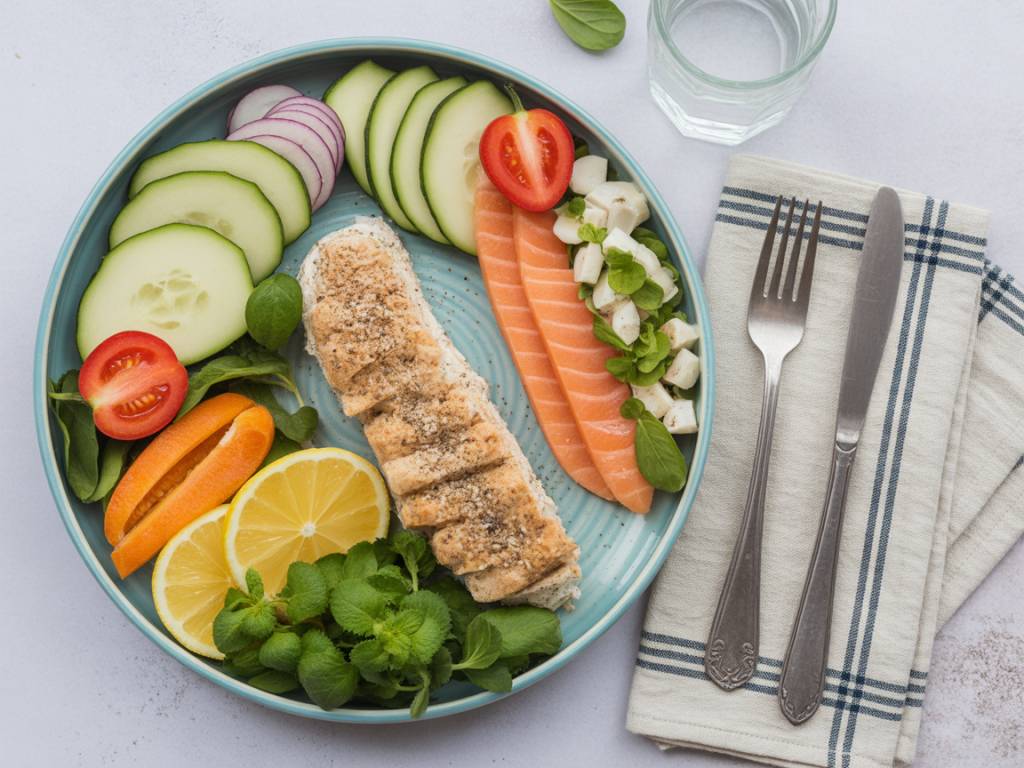
Comment composer une assiette équilibrée : guide simple pour des repas sains au quotidien
Designing a balanced plate is one of the simplest and most effective ways to eat well every day. Instead of counting calories or memorising complex nutrition rules, you can use your plate as a visual guide. This method helps ensure you get the right mix of nutrients, enough energy to get through your day, and meals that are both satisfying and enjoyable.
Why a balanced plate matters
A well-composed plate does more than just look appealing. It plays a central role in supporting long-term health. A balanced mix of macronutrients (carbohydrates, proteins, and fats) and micronutrients (vitamins and minerals) helps to:
- Stabilise blood sugar and decrease energy slumps
- Support muscle maintenance and satiety
- Promote digestive health through fibre intake
- Help regulate appetite and avoid overeating
- Lower the risk of chronic diseases such as type 2 diabetes and cardiovascular disease
Rather than focusing on individual nutrients in isolation, the plate method invites you to consider the meal as a whole: colours, textures, proportions, and food groups working together.
The basic structure of a balanced plate
Health authorities and dietitians around the world often rely on a similar visual model. At its simplest, it looks like this:
- Half the plate: vegetables (and sometimes fruits)
- One quarter: protein-rich foods
- One quarter: whole grains or other complex carbohydrates
- Plus: a small portion of healthy fats
This proportion works at most meals, whether you are cooking at home or eating in a restaurant. It is flexible and adaptable to different cuisines, preferences, and dietary needs.
Half the plate: vegetables, the colourful foundation
Vegetables are the foundation of a balanced plate. They are low in energy but rich in vitamins, minerals, antioxidants, and fibre. Filling half of your plate with vegetables has two key advantages: it increases the density of nutrients and helps you feel full without excessive calories.
To make this half interesting and satisfying, think beyond a simple side salad. You can mix different textures and cooking methods:
- Raw vegetables: grated carrots, cucumber, radishes, cherry tomatoes, leafy greens
- Cooked vegetables: roasted cauliflower, steamed broccoli, sautéed green beans
- Fermented or pickled vegetables: kimchi, sauerkraut, pickled beetroot, which also support gut health
Variety in colour is more than an aesthetic detail. A colourful plate – deep green, orange, red, purple – usually means a richer assortment of phytochemicals. For example, dark leafy greens bring folate and vitamin K, orange vegetables such as carrots and sweet potatoes provide carotenoids, and purple vegetables like red cabbage bring anthocyanins.
One quarter of the plate: proteins for satiety and structure
The protein section helps keep you full, supports muscle repair, and contributes to hormone and enzyme production. Both animal and plant proteins can fit into a balanced plate, and many people benefit from including both across the week.
Examples of protein sources include:
- Animal proteins: fish, poultry, eggs, lean cuts of beef or pork, yoghurt, cheese
- Plant proteins: lentils, chickpeas, beans, tofu, tempeh, edamame, seitan
The way you prepare protein matters. Grilling, baking, steaming, or pan-searing with a little oil are generally preferable to deep frying. Marinating fish or tofu with herbs and spices adds flavour without needing large amounts of salt or fat.
For those following vegetarian or vegan diets, it is often useful to combine sources, such as lentils with whole grains, to obtain a wider range of amino acids and increase overall protein quality.
One quarter of the plate: whole grains and complex carbohydrates
The carbohydrate section of the plate is your main source of readily available energy. Choosing complex carbohydrates rather than refined ones helps maintain stable blood sugar and provides more fibre, vitamins, and minerals.
Common options for this quarter of the plate include:
- Whole grains: brown rice, quinoa, whole wheat pasta, bulgur, barley, oats
- Starchy vegetables: potatoes, sweet potatoes, plantains, corn
- Traditional staples: polenta, wholegrain couscous, buckwheat
Whole grains contain the bran and germ, which are removed in refined grains such as white rice or white bread. These outer layers are where fibre and many nutrients are concentrated. If you are not used to whole grains, you can start by mixing them with refined grains and gradually shift the ratio in favour of whole options.
The discreet but essential presence of healthy fats
Fats are not usually visible as a distinct section of the plate, yet they are crucial for absorbing fat-soluble vitamins (A, D, E, K), supporting brain function, and promoting satiety. The goal is not to eliminate fat, but to choose quality and moderate quantities.
Sources of healthy fats that can be integrated into a balanced meal include:
- Plant oils rich in unsaturated fats: extra virgin olive oil, rapeseed (canola) oil, walnut oil
- Nuts and seeds: almonds, walnuts, hazelnuts, chia seeds, flaxseeds, sesame seeds
- Oily fish: salmon, mackerel, sardines, trout, which provide omega‑3 fatty acids
- Avocado: sliced in salads, on toast, or as a garnish
In practice, fats might appear in the dressing on your vegetables, the oil used for cooking, a sprinkle of seeds over your dish, or a portion of oily fish as your protein.
How to adapt the plate method to different meals
The structure of half vegetables, a quarter protein, and a quarter complex carbohydrates can guide all main meals, but it needs some interpretation depending on the context.
Breakfast in many cultures is more carbohydrate-focused, yet it can still be balanced. For example:
- Whole grain toast (complex carbohydrates) with scrambled eggs (protein) and sautéed spinach or tomatoes (vegetables)
- Plain yoghurt (protein) with oats (carbohydrates), topped with berries and a handful of nuts (fats and fibre)
At lunch and dinner, the plate model applies more directly. Some examples:
- Grilled salmon (protein) with roasted Brussels sprouts and carrots (vegetables) and quinoa (complex carbohydrate)
- Chickpea and vegetable curry (protein and vegetables) served with brown rice (complex carbohydrate)
- Stir-fry with tofu (protein), a mix of colourful vegetables (vegetables), and soba noodles or brown rice (complex carbohydrate), cooked in a small amount of oil (healthy fats)
For snacks, the same principles can be applied on a smaller scale: combining at least two food groups tends to be more satisfying than relying on carbohydrates alone. For instance, fruit with a few nuts, or vegetable sticks with hummus, offers a balance of fibre, protein, and healthy fats.
Special cases: appetite, activity, and personal goals
The plate method is a flexible framework rather than a rigid prescription. Several factors may influence how you adjust it:
- Physical activity: If you are very active or train intensively, you may require a slightly larger portion of complex carbohydrates to fuel your efforts.
- Appetite regulation: Individuals who struggle with constant hunger may benefit from slightly increasing the protein or vegetable portion for extra satiety.
- Weight management: For those aiming to reduce energy intake, increasing the proportion of non-starchy vegetables while moderately lowering the amount of starch can be helpful, as long as meals remain satisfying.
- Health conditions: In case of diabetes, heart disease, digestive disorders, or food allergies, personalised advice from a registered dietitian is important. The plate model can still serve as a base but might need specific adaptations.
Practical tips to apply the balanced plate every day
Turning theory into everyday practice depends on organisation and a few simple habits rather than elaborate recipes.
- Plan vegetables first: When thinking about a meal, start by deciding which vegetables you will use, then add protein and carbohydrates around them.
- Prepare basics in advance: Cooking a batch of whole grains or roasting a tray of mixed vegetables once or twice a week makes balanced plates faster to assemble.
- Stock your kitchen strategically: Keep staples such as canned beans, frozen vegetables, whole grains, and nuts on hand to build a complete plate even when time is short.
- Watch portion sizes visually: If you do not want to weigh or measure food, use simple cues: half of the plate covered with vegetables, roughly the size of your palm for protein, and the size of a cupped hand for grains or starches.
- Balance over the day, not just at one meal: If one meal is less balanced (for instance, a business lunch heavy in refined carbohydrates), you can compensate at the next meal by emphasising vegetables and high-quality protein.
Above all, a balanced plate should remain a source of pleasure. Herbs, spices, good-quality oils, and cooking techniques like roasting or grilling help make vegetables and whole grains truly appetising. When structure and enjoyment coexist on the plate, healthy eating becomes a sustainable habit rather than a constraint.