


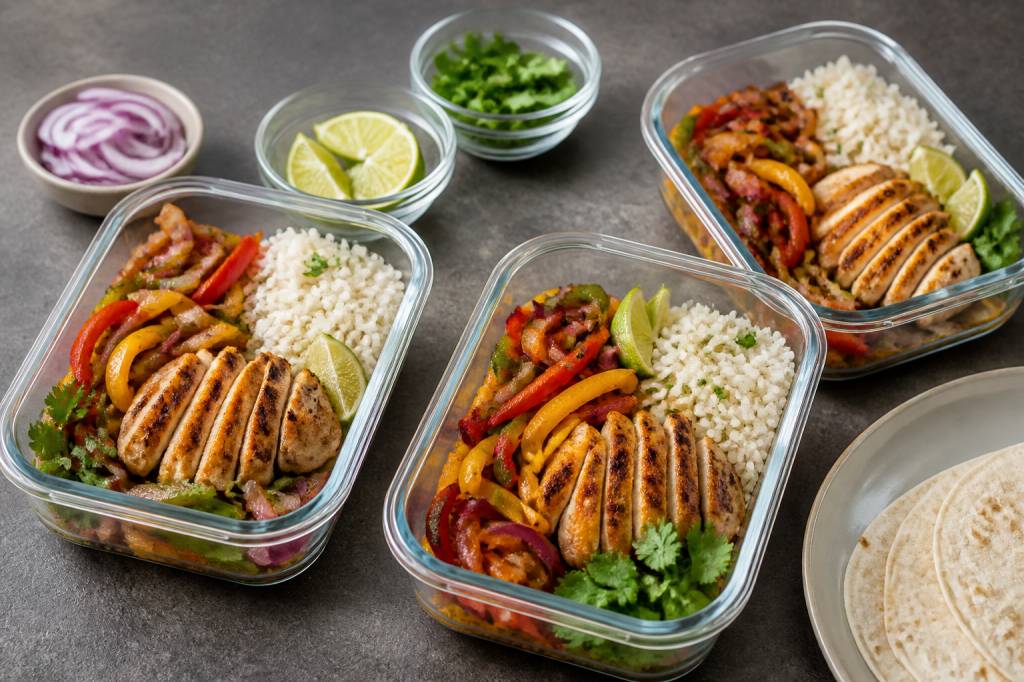
Fajitas are one of those rare meals that manage to be colourful, comforting and genuinely practical. With a hot pan, a few everyday ingredients and a smoky spice blend, you can prepare several balanced meals for the week without eating the same sad desk lunch twice.
This fajita meal prep plan is designed for busy weekdays. It includes flexible recipes for chicken, beans and roasted vegetables, plus simple ideas for serving them in tortillas, rice bowls or salads. The aim is not perfection. It is to make healthy eating easier when your schedule is full and your energy is running low.
Why fajitas work so well for meal prep
A balanced fajita meal has a useful combination of protein, fibre, carbohydrates and healthy fats. The vegetables add volume, colour and micronutrients, while the protein helps keep you satisfied. Wholegrain rice, beans or wholemeal tortillas provide slower-release carbohydrates, and a little avocado, yoghurt or cheese adds richness without needing a heavy sauce.
There is also plenty of room to adapt the recipe to your preferences. Chicken can be replaced with tofu, prawns or extra beans. Rice can become quinoa. Peppers can be joined by courgette, mushrooms or sweet potato. This is exactly the kind of flexible cooking that helps reduce food waste and keeps meal prep interesting.
Another advantage is that most of the ingredients can be cooked in one large tray or frying pan. Less washing up means more time for the things you would rather be doing. Nobody starts meal prep dreaming about scrubbing six saucepans.
The building blocks of a balanced fajita box
Before cooking, think of each meal as four simple components:
- Protein: chicken breast or thigh, lean beef, prawns, tofu, eggs or beans.
- Vegetables: peppers and onions are classic, but courgette, sweetcorn, tomatoes, mushrooms and leafy greens work beautifully too.
- Smart carbohydrates: brown rice, quinoa, wholemeal tortillas, potatoes or black beans.
- Flavour and healthy fats: lime, coriander, avocado, Greek yoghurt, salsa, olive oil and a measured amount of cheese.
For a satisfying lunch, aim for roughly half the container to be vegetables, one quarter protein and one quarter carbohydrates. This does not need to be measured with laboratory precision. It is simply a useful visual guide that keeps the meal filling without allowing rice or tortillas to take over the entire box.
Easy homemade fajita seasoning
Making your own seasoning takes less than a minute and allows you to control the salt and heat. For approximately four portions, mix:
- 2 teaspoons smoked paprika
- 1 teaspoon ground cumin
- 1 teaspoon dried oregano
- 1 teaspoon garlic granules
- ½ teaspoon onion granules
- ½ teaspoon mild chilli powder
- ¼ teaspoon black pepper
- A pinch of sea salt, or more to taste
Add the juice of half a lime and one tablespoon of olive oil when coating the chicken or vegetables. If you enjoy more heat, include chilli flakes or a finely chopped fresh chilli. For a milder family-friendly version, leave out the chilli powder and serve hot sauce separately.
Sheet-pan chicken fajitas
This is the most efficient recipe in the plan. Everything cooks together on one tray, and the edges of the peppers become slightly caramelised while the chicken stays juicy. Use chicken thighs for more flavour or chicken breast for a leaner option.
Ingredients for four portions:
- 600g boneless, skinless chicken breast or thigh, sliced into strips
- 3 bell peppers, thinly sliced
- 2 red onions, sliced into wedges
- 2 tablespoons olive oil
- The homemade fajita seasoning
- Juice of 1 lime
- Fresh coriander, optional
Heat the oven to 220°C, or 200°C fan. Add the chicken, peppers and onions to a large roasting tray. Pour over the oil, lime juice and seasoning, then toss thoroughly so everything is coated. Spread the ingredients into a single layer. Crowding the tray can cause the vegetables to steam rather than roast, so use two trays if necessary.
Roast for 20 to 25 minutes, turning once halfway through. The chicken should be completely cooked, with no pink centre, and should reach 75°C in the thickest part if checked with a food thermometer. Scatter over coriander before serving.
For four balanced meals, divide the chicken and vegetables between containers with one of the following options:
- Brown rice and black beans for a high-fibre bowl
- Two small wholemeal tortillas, packed separately
- Quinoa and a handful of salad leaves
- Roasted sweet potato and a spoonful of Greek yoghurt
Plant-based black bean and tofu fajitas
Fajitas do not need meat to be satisfying. Tofu absorbs the smoky seasoning well, while black beans add fibre and a soft, creamy texture. This combination is especially useful if you are trying to include more plant-based meals during the week.
Press 400g of firm tofu for at least 15 minutes, then tear or cut it into bite-sized pieces. Toss it with one tablespoon of oil, half of the seasoning mix and one teaspoon of cornflour. The cornflour is optional, but it helps the tofu develop crisp edges in the oven.
Place the tofu on a baking tray with sliced peppers, red onion and courgette. Roast at 220°C, or 200°C fan, for 25 to 30 minutes, turning once. Warm one 400g tin of drained black beans with the remaining seasoning, a splash of water and the juice of half a lime.
Divide the tofu, vegetables and beans between four containers. Add cooked brown rice or quinoa, then finish with salsa and a few slices of avocado when serving. Keep the avocado separate during storage to prevent it from browning too quickly.
Three ways to serve the same preparation
Meal prep becomes much easier when the base ingredients are versatile. Cook one batch of fajita filling, then change the format throughout the week.
- Fajita bowls: layer rice, beans, chicken or tofu, roasted vegetables, salsa and yoghurt. Add fresh lime just before eating.
- Wholemeal wraps: fill a tortilla with the fajita mixture, salad leaves and a spoonful of guacamole. Keep the filling cool before assembling to avoid a soggy wrap.
- Fajita salad: serve the warm filling over crunchy lettuce, cucumber and tomatoes. A dressing made with Greek yoghurt, lime juice and smoked paprika adds creaminess without relying on mayonnaise.
- Stuffed sweet potatoes: split a baked sweet potato and fill it with black beans, peppers and salsa. This is particularly good for a colder lunch.
You can even turn leftovers into breakfast. Add the vegetables and beans to scrambled eggs, or fold them into an omelette with a little grated cheese. A meal prep ingredient should ideally work harder than a one-meal wonder.
Fresh toppings that make meal prep taste better
The main fajita mixture can be cooked in advance, but fresh toppings are what make it taste newly prepared. Store them separately and add them just before eating.
- Lime yoghurt: mix Greek yoghurt with lime zest, lime juice and a pinch of salt.
- Quick tomato salsa: combine chopped tomatoes, red onion, coriander, lime juice and a little chilli.
- Simple guacamole: mash avocado with lime juice, black pepper and chopped coriander.
- Pickled onions: cover thinly sliced red onion with vinegar, a pinch of sugar and salt. They are ready after 30 minutes and keep for several days in the fridge.
- Crunchy garnish: use pumpkin seeds, sliced spring onions or shredded cabbage for texture.
Texture matters more than many people realise. Soft rice, tender vegetables and protein can become monotonous by day three, but a crunchy topping or sharp salsa makes the same base feel much more exciting.
How to prep the ingredients efficiently
Start by cooking the carbohydrate component, as rice and quinoa take the longest. While it cooks, slice the vegetables and prepare the seasoning. Mix the chicken or tofu with the spices just before it goes into the oven.
If you are using rice, spread it into a shallow dish after cooking so it cools quickly. Once steam has stopped rising, refrigerate it in covered containers. Cooked rice should not be left at room temperature for extended periods, as bacteria can multiply even when the rice looks and smells perfectly normal.
Prepare four portions at once, but keep wet ingredients separate. Salsa, yoghurt, guacamole and dressings are best stored in small pots. Tortillas should also remain outside the main container so they stay flexible rather than damp.
Allow the cooked food to cool slightly before sealing the containers, but refrigerate it promptly. Store meals at 4°C or below and eat them within three to four days. If you want to prepare further ahead, freeze the cooked fajita filling and rice in individual portions. Thaw overnight in the refrigerator and reheat until piping hot.
Smart shopping for a budget-friendly week
A healthy meal prep plan does not need a long or expensive shopping list. Frozen peppers, onions and sweetcorn can be useful, particularly when fresh produce is costly or you are cooking for one. Tinned beans are affordable, convenient and an excellent source of fibre. Choose reduced-salt versions where available, or rinse standard beans thoroughly under cold water.
Buy ingredients that can appear in more than one meal. Greek yoghurt can be used for fajita sauce, breakfast and a simple marinade. Limes add brightness to the fajitas and can also flavour sparkling water. A large bag of salad leaves may serve as a wrap filling, side salad and omelette ingredient.
For the best value, compare the price per kilogram rather than the front-of-pack price. Larger packs are not always cheaper, and a bargain is not a bargain if half of it ends up forgotten at the back of the fridge.
Simple swaps for different nutritional needs
The recipes are easy to adjust without losing their character. For a higher-protein meal, increase the chicken, tofu or beans and use a little less rice. For more fibre, choose brown rice, wholemeal tortillas and extra vegetables. If you need a lower-carbohydrate option, replace rice and tortillas with cauliflower rice, shredded cabbage or a generous salad.
To reduce saturated fat, choose skinless chicken, beans or tofu and use avocado or yoghurt for creaminess. If you are watching sodium intake, make the seasoning from scratch, rinse tinned beans and use fresh lime, garlic and herbs to add flavour.
For gluten-free meals, serve the fajita filling in corn tortillas or a bowl, and check the labels on spice blends, stock and other packaged ingredients. For a dairy-free version, use unsweetened plant-based yoghurt or simply add extra salsa and avocado.
A realistic four-day fajita meal prep plan
- Monday: chicken fajita bowl with brown rice, black beans and lime yoghurt.
- Tuesday: wholemeal chicken wrap with salad leaves and tomato salsa.
- Wednesday: tofu and black bean fajita salad with pickled onions.
- Thursday: stuffed sweet potato with the remaining fajita vegetables and guacamole.
Cooked ingredients may taste slightly different after a few days, but that is where fresh toppings and varied serving ideas earn their place. You are not preparing four identical meals; you are preparing a small collection of components that can become several lunches.
With one tray of roasted vegetables, a reliable protein and a few vibrant toppings, fajita meal prep becomes a practical way to eat well throughout a busy week. It is colourful enough to look appealing, filling enough to prevent the afternoon biscuit raid and flexible enough to suit nearly any eating style. That sounds like a weekday win to us.