


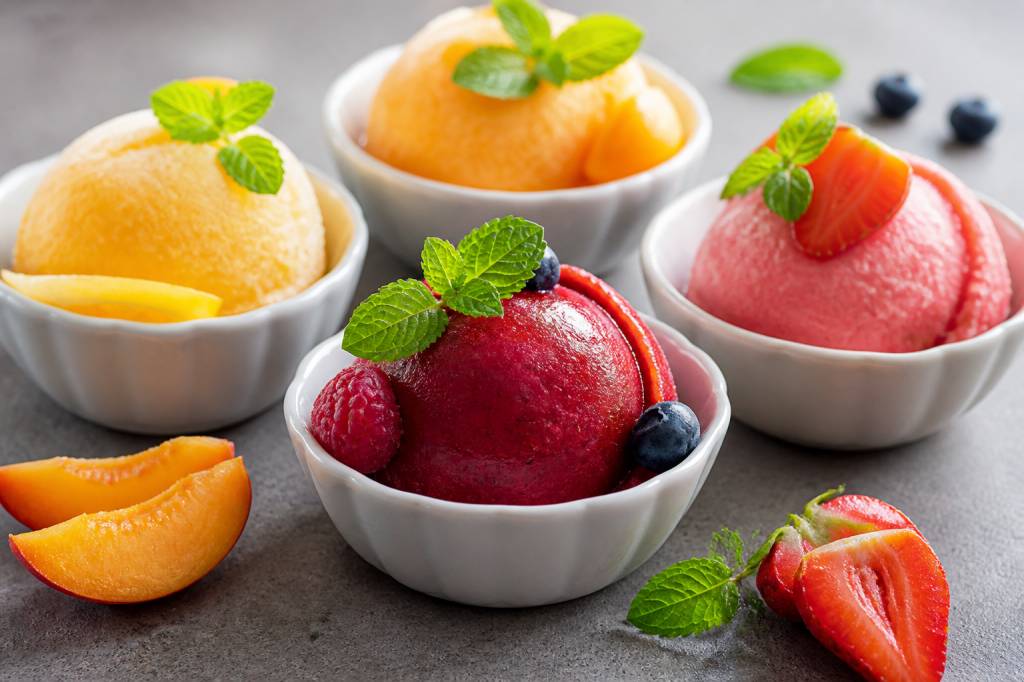
When the weather turns warm, few desserts feel as satisfying as a bowl of homemade fruit sorbet. It is cold, bright, naturally refreshing and wonderfully easy to adapt to whatever fruit is looking best at the market. Unlike ice cream, sorbet contains no dairy, making it a useful option for vegan guests or anyone wanting a lighter finish to a meal.
The best part? You do not need a long list of ingredients or complicated equipment. With ripe fruit, a little acidity and the right amount of sweetness, you can create a smooth frozen dessert that tastes far fresher than most shop-bought alternatives.
In this guide, we will cover the essential sorbet method, practical tips for achieving a scoopable texture and several fruit sorbet recipes to try at home. Think of it as a flexible formula rather than a strict rulebook. Once you understand the basics, your freezer becomes a small test kitchen.
What makes a good fruit sorbet?
Sorbet is built around three simple elements: fruit, liquid and sugar. The fruit provides flavour, colour and water. A small amount of lemon or lime juice adds balance. Sugar contributes sweetness, but it also affects the texture by reducing the formation of large ice crystals.
This last point matters. A sorbet with too little sugar may freeze into a hard, icy block. Too much sugar, on the other hand, can leave it soft and overly sweet. The goal is a mixture that tastes slightly sweeter before freezing than you would normally serve, because cold temperatures dull our perception of sweetness.
Ripe fruit is usually the best starting point. A peach that is bland before freezing will not magically become more interesting in the freezer. Use fruit that smells fragrant and tastes good on its own. Frozen fruit can also work well, particularly for berries and mango, provided it is unsweetened.
The basic homemade sorbet method
Most fruit sorbets follow the same process. Blend the ingredients until smooth, chill the mixture thoroughly and then freeze it. An ice cream machine makes the texture especially light, but a freezer-only method is perfectly possible.
- Prepare approximately 500–600g of ripe fruit.
- Add 75–150g of sugar, depending on the fruit and your taste.
- Include 1–2 tablespoons of lemon or lime juice.
- Blend until completely smooth.
- Chill the mixture for at least one hour.
- Churn in an ice cream maker, or freeze in a shallow container.
- Allow the sorbet to soften for 10–15 minutes before serving.
If you are using an ice cream maker, follow the manufacturer’s instructions. For the no-churn approach, pour the mixture into a shallow, freezer-safe container. Freeze for around 45 minutes, then stir vigorously with a fork or whisk to break up ice crystals. Repeat this process two or three times, until the mixture is firm and mostly smooth.
A food processor can improve the texture further. Freeze the sorbet until solid, cut it into chunks and process briefly until creamy. Return it to the freezer for 30–60 minutes before serving. It is a little more hands-on, but the result can be impressively smooth.
Easy strawberry and lime sorbet
Strawberries are naturally suited to sorbet. Their sweetness needs very little support, while lime juice gives the flavour a fresh, almost sparkling quality. This recipe is ideal when berries are abundant and you want to use them before they become too soft.
- 600g ripe strawberries, hulled
- 100g caster sugar
- 2 tablespoons fresh lime juice
- 60ml water
- 1 teaspoon finely grated lime zest, optional
Add the water and sugar to a small saucepan and warm gently until the sugar dissolves. There is no need to boil the syrup. Allow it to cool, then blend it with the strawberries, lime juice and zest.
Pass the mixture through a sieve if you prefer a particularly smooth sorbet. Strawberry seeds are harmless, of course, but removing them gives the dessert a more polished texture. Chill the mixture thoroughly before churning or using the freezer method.
Serve with a few sliced strawberries, fresh mint or a spoonful of coconut yoghurt. The sorbet is also excellent alongside a simple almond biscuit when you want a dessert that feels special without becoming heavy.
Refreshing mango and passion fruit sorbet
Mango brings plenty of natural sweetness and a creamy texture, while passion fruit adds acidity and a little tropical drama. This combination tastes like sunshine in a bowl, even if the British weather has other plans.
- 500g ripe mango flesh, chopped
- 3 passion fruits
- 75g caster sugar or maple syrup
- 1 tablespoon lime juice
- 80ml water
Blend the mango, sugar, lime juice and water until smooth. Scoop the pulp from two passion fruits into the blender and pulse briefly. Strain the mixture if you want to remove the seeds, or leave them in for extra texture. Keep the pulp from the remaining passion fruit to drizzle over the finished sorbet.
Mango sorbet can be quite soft because ripe mango contains less water than many other fruits. This is not a problem; it simply means the sorbet may be ready to serve after a shorter freezing time. For an attractive presentation, freeze it in a loaf tin and scoop it into chilled glasses.
Raspberry and lemon sorbet
Raspberries create a beautifully coloured sorbet with a sharp, aromatic flavour. Lemon juice helps to balance their natural acidity and keeps the dessert tasting lively rather than sugary.
- 500g raspberries, fresh or frozen
- 120g caster sugar
- 100ml water
- 2 tablespoons lemon juice
- 1 teaspoon lemon zest
Warm the water and sugar in a saucepan until dissolved. Blend the syrup with the raspberries, lemon juice and zest. Raspberry seeds can be quite noticeable, so pour the purée through a fine sieve and press gently with the back of a spoon to extract as much liquid as possible.
Chill the strained mixture, then churn until thick and smooth. If using frozen raspberries, allow them to soften slightly before blending so that your machine is not forced to work too hard.
This sorbet makes a refreshing palate cleanser between courses, but it also works beautifully with dark chocolate desserts. A small scoop beside a warm brownie is a very persuasive argument for keeping dessert simple.
Watermelon and mint sorbet
Watermelon has an extremely high water content, making it naturally cooling but slightly more challenging to turn into a smooth sorbet. The key is to use enough sugar and avoid adding extra water. Fresh mint and lime make this recipe particularly refreshing.
- 800g seedless watermelon flesh, cubed
- 100g caster sugar
- 2 tablespoons lime juice
- 8–10 fresh mint leaves
- 1 tablespoon vodka, optional
Blend the watermelon, sugar, lime juice and mint until smooth. Taste the mixture before freezing. If the watermelon is very sweet, you may need less sugar; if it is watery or slightly bland, the sugar and lime will provide useful balance.
The optional vodka helps prevent the sorbet from freezing too firmly. You will not taste a tablespoon spread across the whole batch, but you should omit it if serving the dessert to children. Churn the mixture, then freeze until scoopable.
For a fun summer serving idea, make small scoops and place them in chilled glasses with sparkling water. It becomes a quick homemade fruit slush that is suitable for picnics, barbecues and hot afternoons in the garden.
Peach and ginger sorbet
Peaches bring a gentle floral sweetness, while fresh ginger adds a warm, fragrant edge. This is a good recipe for fruit that is ripe but slightly bruised or too soft to serve neatly. Sorbet is an excellent way to rescue produce that still has plenty of flavour.
- 600g ripe peaches, stones removed
- 100g caster sugar
- 100ml water
- 1 tablespoon lemon juice
- 1–2 teaspoons finely grated fresh ginger
Place the water, sugar and ginger in a saucepan and warm until the sugar dissolves. Leave the syrup to infuse for 10 minutes, then strain if you prefer a smooth flavour. Blend with the peaches and lemon juice.
Peeling the peaches is optional. If your blender is powerful, the skins will usually disappear into the mixture. For a silkier finish, briefly score the peaches, place them in boiling water for 30 seconds and transfer them to cold water. The skins should then slip away easily.
Serve peach sorbet with toasted almonds, fresh berries or a few leaves of basil. It also makes a smart dairy-free alternative to ice cream alongside a fruit crumble.
How to improve sorbet texture
Texture is where homemade sorbet can differ most from commercial products. The following details make a noticeable difference:
- Chill the mixture first: A cold base freezes faster, creating smaller ice crystals.
- Use a shallow container: A wider, shallower layer freezes more evenly than a deep tub.
- Do not reduce the sugar too aggressively: Sugar is part of the texture, not just a sweetener.
- Add citrus carefully: Lemon and lime brighten fruit, but too much can overpower delicate flavours.
- Cover the surface: Press baking paper or reusable wrap directly onto the sorbet to reduce freezer burn.
- Allow it to soften before scooping: Five to fifteen minutes at room temperature can transform a solid block into a smooth dessert.
For an especially creamy texture, you can add a small amount of liquid glucose, honey or alcohol. These ingredients lower the freezing point and help prevent hardness. Honey has a distinctive flavour, so use it when it suits the fruit. A tablespoon of vodka is more neutral, but it should be used sparingly.
Choosing fruit and ingredients when shopping
Good sorbet starts with good shopping. Look for fruit that is fragrant, colourful and heavy for its size. Slightly imperfect fruit is often ideal because it may be cheaper while still being perfectly ripe inside.
Frozen fruit is a practical choice outside the main growing season. Check the label and choose products without added sugar or syrup. Frozen berries can go directly into a blender after a brief softening period. Frozen mango is particularly convenient and often consistent in quality.
Fresh citrus juice is worth using whenever possible. Bottled juice can taste flat and may contain preservatives that distract from the fruit. If you are buying lemons or limes, choose firm fruit with smooth, bright skin. A quick roll on the worktop before squeezing can help release more juice.
For a healthier everyday dessert, focus on ripe fruit and keep portions sensible rather than trying to remove every gram of sugar. Homemade sorbet gives you control over the ingredients, but sugar still has a culinary purpose. It is perfectly possible to make a dessert that is lighter than many traditional options without making it bland or icy.
Creative ways to serve fruit sorbet
A scoop of sorbet is lovely on its own, but a few simple additions can turn it into a memorable dessert. Try serving it with:
- Fresh herbs such as mint, basil or lemon verbena
- Toasted coconut flakes or chopped pistachios
- Fresh berries and a little citrus zest
- A crisp oat biscuit or almond tuile
- Sparkling water for a homemade sorbet float
- Chopped fresh fruit dressed with lime juice
You can also freeze sorbet in ice-lolly moulds for a portable summer treat. Pour the mixture into moulds before it becomes fully frozen, insert the sticks and freeze for at least four hours. Small moulds are useful for children, while larger ones make a colourful dessert for adults.
For dinner parties, prepare the sorbet a day ahead and serve modest scoops in chilled bowls. The cold, clean flavour works particularly well after spicy food, grilled dishes or a rich main course. It gives the meal a fresh finish without leaving everyone searching for a nap.
Storing homemade sorbet
Homemade sorbet is best enjoyed within one to two weeks, although it may remain safe for longer if stored correctly. Keep it in an airtight container with minimal empty space. Every time warm air enters the container, ice crystals have another opportunity to form.
Label the container with the flavour and date. This small habit is surprisingly useful when your freezer contains several brightly coloured tubs. Before serving, let the sorbet stand at room temperature until it becomes scoopable. Avoid repeatedly melting and refreezing the entire batch, as this will gradually damage the texture.
Once you have mastered the basic method, experiment with combinations such as blueberry and lemon, pineapple and basil, or cherry and almond. Homemade fruit sorbet is forgiving, adaptable and a brilliant way to make the most of seasonal produce. Start with fruit that tastes good, keep the mixture balanced and let the freezer do the rest.