


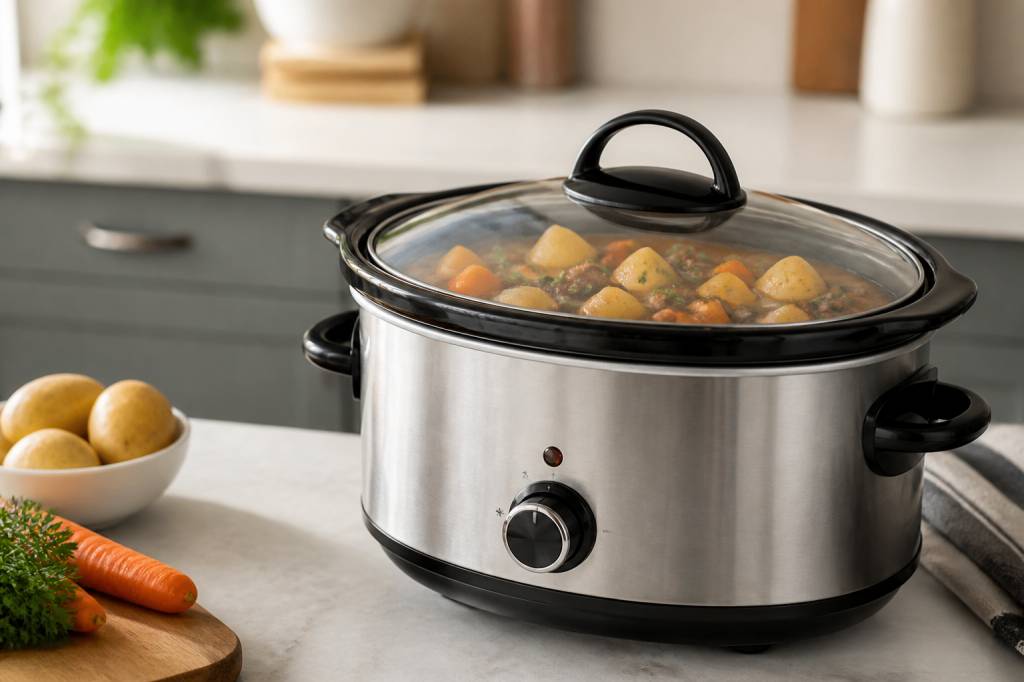
A slow cooker crock pot is one of the simplest ways to prepare nourishing, flavour-packed food with very little hands-on effort. Add your ingredients in the morning, let gentle heat do the work, and return home to a meal that smells as though you have been cooking all day—because you have, technically.
Used well, a slow cooker can help you eat more vegetables, make affordable cuts of meat tender, and reduce the temptation to rely on takeaway food after a busy day. It is also remarkably forgiving, although a few basic principles will make the difference between a rich, satisfying meal and a watery stew with the personality of a wet sock.
Here is how to use your slow cooker for healthy, delicious meals, from choosing the right ingredients to storing leftovers safely.
How a slow cooker works
A slow cooker cooks food slowly at a low, steady temperature. Most models have two main settings: low and high. The low setting usually takes around six to eight hours, while the high setting often takes three to four hours, although cooking times vary between appliances.
The sealed crock pot traps steam as the food cooks. This helps prevent moisture loss and allows tougher ingredients, such as beans, lentils and inexpensive cuts of meat, to soften gradually. The result is deep flavour and tender texture without the need for constant stirring or supervision.
Slow cooking is particularly useful for meals containing liquid, including soups, curries, casseroles, chilli and stews. It is less suitable for foods that need to remain crisp, such as roast potatoes or battered fish. Think comfort food, not restaurant-style crunch.
Choose the right ingredients
A healthy slow cooker meal starts with a balanced combination of ingredients. Aim to include a source of protein, plenty of vegetables, a satisfying carbohydrate if needed, and flavourful herbs or spices.
- Protein: chicken thighs, lean beef, turkey, fish, tofu, chickpeas, lentils and beans all work well.
- Vegetables: onions, carrots, celery, peppers, mushrooms, sweet potatoes, squash, tomatoes and leafy greens are excellent choices.
- Carbohydrates: pearl barley, brown rice, quinoa, potatoes and wholegrain pasta can make a meal more filling.
- Flavour builders: garlic, ginger, smoked paprika, cumin, rosemary, thyme, chilli, lemon, stock and tomato paste add depth without relying on excessive salt.
Frozen vegetables are perfectly acceptable and can be useful when fresh produce is expensive or unavailable. However, avoid adding large quantities of frozen meat directly to a slow cooker, as it may remain too long in the temperature range where bacteria multiply. Thaw meat safely in the fridge before cooking.
Prepare ingredients for even cooking
Cut ingredients into similar-sized pieces so they cook at roughly the same rate. Large chunks of carrot may need much longer than small pieces of potato, while a thin slice of chicken can become dry before a thick piece is fully cooked.
Place firm vegetables near the bottom of the crock pot, where they are closest to the heat. Potatoes, carrots, onions and squash are good examples. Add meat on top of these ingredients, followed by softer vegetables and other delicate additions.
Do you need to brown meat first? Not always, but it can improve flavour. Searing beef, lamb or chicken in a hot pan creates a richer, more savoury surface. It also adds another pan to wash, so the choice depends on how much flavour you want and how much enthusiasm you have before breakfast.
For everyday cooking, you can skip browning and still produce a delicious meal, particularly when using bold spices, herbs, tomatoes or a well-seasoned stock.
Do not overfill the crock pot
For the best results, fill your slow cooker between half and two-thirds full. If it is too full, the food may cook unevenly and take longer than expected. If it is barely filled, food can cook too quickly and may dry out.
Keep the lid firmly in place during cooking. Every time you lift it, heat and steam escape, which can add around 15 to 20 minutes to the cooking time. Stir only when the recipe specifically requires it. Slow cookers are designed to be left alone, so let the appliance get on with its job.
Be careful with liquid. Slow cookers lose far less moisture than a saucepan, so you usually need less stock, water or wine than you would for a conventional recipe. As a general rule, ingredients should be surrounded by liquid but not swimming in it.
Too much liquid can dilute the flavour and leave you with a thin sauce. If the finished dish is watery, transfer the liquid to a saucepan and simmer it until reduced. Alternatively, stir in a small amount of cornflour mixed with cold water during the final stage of cooking.
Build flavour without excess salt
Slow cooking brings out sweetness and savoury depth, but it can also soften the impact of some seasonings. Instead of simply adding more salt, layer flavour throughout the recipe.
- Sauté onions, garlic or spices briefly before adding them to the crock pot.
- Use unsalted or reduced-salt stock so you control the final seasoning.
- Add tomato paste for richness and natural umami.
- Use fresh herbs near the end and dried herbs earlier in the cooking process.
- Finish with lemon juice, lime juice, vinegar or fresh herbs to brighten the dish.
- Add black pepper, chilli, smoked paprika or toasted spices for extra character.
Acid is especially useful. A spoonful of red wine vinegar can transform a heavy beef stew, while lemon juice wakes up a lentil soup. Add small amounts, taste, and adjust. Healthy food should not mean joyless food.
Healthy slow cooker cooking techniques
There are several easy ways to keep slow cooker meals nutritious without making them complicated.
Load up on vegetables. Use vegetables as the foundation rather than a decoration. A curry can contain peppers, cauliflower, spinach and courgette. A chilli can include mushrooms, sweetcorn and grated carrot alongside beans. More vegetables add fibre, colour and volume, helping you feel satisfied.
Choose sensible proteins. Skinless chicken thighs tend to stay more tender than chicken breast, but trim visible fat where appropriate. Beans, lentils and chickpeas are affordable plant-based options that provide fibre and protein. If using canned beans, drain and rinse them to reduce excess salt.
Be selective with creamy ingredients. Coconut milk, cream and cheese can be used, but they are calorie-dense. Try using light coconut milk, unsweetened Greek yoghurt stirred in at the end, or a blended vegetable purée to create a creamy texture.
Use whole ingredients. Homemade stock, tinned tomatoes, dried herbs, pulses and fresh vegetables make it easier to avoid unnecessary additives. This does not mean every meal must be made from scratch. A good-quality jar of passata or a packet of frozen spinach can be a practical shortcut.
When to add different ingredients
Not every ingredient should go in at the beginning. Hardy foods need time, while delicate ingredients can become mushy if cooked for too long.
- Add onions, carrots, potatoes, pulses and tougher cuts of meat at the start.
- Add chicken breast carefully, as it can dry out if overcooked.
- Add fish, seafood, fresh herbs and leafy greens during the final 15 to 30 minutes where possible.
- Add cooked beans, peas and sweetcorn during the last hour if you want them to retain more texture.
- Add dairy products, such as yoghurt or soft cheese, after cooking or just before serving to reduce the risk of splitting.
- Add pasta and rice according to the recipe instructions, usually near the end.
Leafy greens such as kale, spinach and spring greens need very little cooking. Stir them through the hot dish just before serving and allow them to wilt. This keeps their colour fresher and prevents them from disappearing into the sauce.
Simple slow cooker meal ideas
Hearty lentil and vegetable soup: Combine green or brown lentils with chopped carrots, celery, onion, tomatoes, garlic, vegetable stock, cumin and smoked paprika. Cook until the lentils are tender, then add spinach and a squeeze of lemon. Serve with wholegrain bread for a budget-friendly lunch.
Chicken, tomato and butter bean casserole: Add chicken thighs, butter beans, passata, peppers, onions, garlic, oregano and a little smoked paprika. Cook until the chicken is tender, then stir through fresh basil. The beans help stretch the meal while adding fibre and a creamy texture.
Three-bean chilli: Use kidney beans, black beans and cannellini beans with chopped tomatoes, peppers, onion, sweetcorn, garlic, cumin and chilli. For extra vegetables, add grated courgette or finely chopped mushrooms. Serve with brown rice, a baked potato or a spoonful of plain yoghurt.
Slow-cooked vegetable curry: Combine cauliflower, sweet potato, chickpeas, tomatoes, onion, garlic, ginger, turmeric and curry spices. Add light coconut milk for richness, then finish with lime juice and coriander. Add spinach at the end for freshness.
Apple and cinnamon oats: For a make-ahead breakfast, cook steel-cut oats with milk or a fortified plant-based alternative, chopped apples, cinnamon and chia seeds. Add nuts or yoghurt when serving. Check your appliance instructions, as some slow cookers are better suited to overnight breakfast recipes than others.
Food safety essentials
A slow cooker is safe when used correctly, but it is not a substitute for sensible food hygiene. Always wash your hands before preparing ingredients and keep raw meat separate from vegetables and ready-to-eat foods.
Thaw meat in the refrigerator rather than on the kitchen counter. Avoid using the slow cooker to reheat leftovers, as it may take too long to bring food to a safe temperature. Reheat leftovers quickly in a saucepan or microwave until steaming hot throughout.
Once cooked, do not leave food sitting at room temperature for several hours. Divide leftovers into shallow containers, cool them promptly, and refrigerate them. Eat refrigerated leftovers within two to three days, or freeze them in suitable portions.
Check that meat and poultry are fully cooked in the centre. Chicken should be thoroughly cooked with no pink meat, and a food thermometer is the most reliable way to check. If your slow cooker has a removable ceramic crock, allow it to cool before placing it in the refrigerator, as sudden temperature changes may cause cracking.
Make slow cooking work for your routine
The real benefit of a crock pot is consistency. Choose recipes that create several portions and freeze what you will not eat within a few days. Label containers with the name and date so the freezer does not become an archaeological dig of unidentified soup.
Prepare ingredients the night before if mornings are rushed. Chop vegetables, measure spices and store everything safely in the refrigerator. In the morning, add the ingredients to the crock pot, set the timer according to the recipe, and get on with your day.
Try creating a small collection of reliable recipes rather than searching for something completely new every evening. Once you understand how your appliance behaves, you can adapt meals with confidence. Swap chickpeas for beans, use barley instead of potatoes, or replace beef with mushrooms and lentils.
A slow cooker cannot replace good ingredients or thoughtful seasoning, but it can make healthy home cooking much easier. With balanced ingredients, careful preparation and a little patience, it turns simple food into generous, comforting meals that fit around real life.