


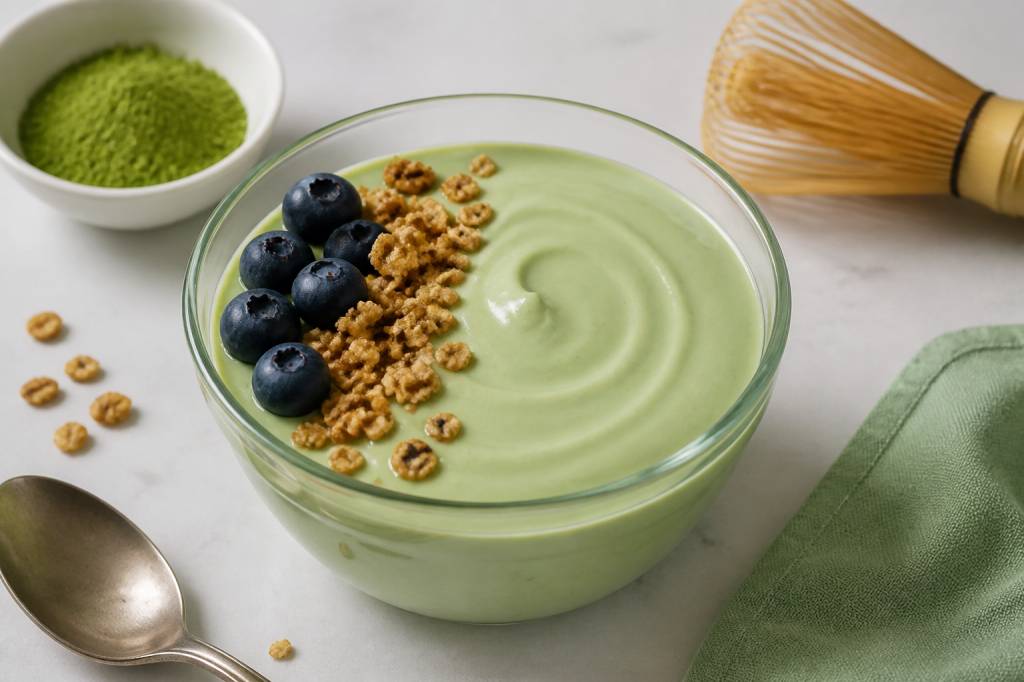
There is something wonderfully practical about a recipe that feels like a treat but fits easily into an everyday routine. Matcha green tea yogurt is exactly that: creamy, gently sweet, naturally vibrant and ready in minutes. It works as a quick breakfast, a mid-afternoon snack or a lighter dessert when you want something satisfying without reaching for a heavily processed option.
Matcha brings a distinctive earthy flavour and a small amount of caffeine, while Greek yogurt or another thick cultured yogurt provides protein and a smooth, spoonable texture. Add a little fruit, nuts or seeds, and you have a simple bowl with plenty of flavour and texture. No complicated equipment, no long ingredient list and no need to become a pastry chef before breakfast.
Why matcha green tea yogurt is worth making
Matcha is made by grinding specially grown green tea leaves into a fine powder. Unlike steeped green tea, where the leaves are removed, matcha is whisked into water or another ingredient and consumed whole. This gives it a bold colour, concentrated taste and a useful place in simple recipes.
Green tea naturally contains plant compounds called polyphenols, including catechins. These compounds are one reason green tea is often associated with antioxidant activity. It is important not to treat matcha as a miracle ingredient, but adding it to a balanced diet can be an enjoyable way to include more plant-based compounds in your meals.
The yogurt matters too. A plain Greek-style yogurt can contribute protein, calcium and a creamy texture, while live cultures may support a varied and balanced gut environment. Nutritional values differ between products, so checking the label is worthwhile, particularly if you are choosing between full-fat, reduced-fat, high-protein or dairy-free options.
Most importantly, this recipe is flexible. You can adjust the sweetness, change the toppings and make it work with what is already in your kitchen. That is the kind of healthy eating habit that tends to last: realistic, enjoyable and not dependent on a cupboard full of unusual ingredients.
Ingredients for two servings
- 300g thick plain Greek yogurt or natural yogurt
- 1 to 2 teaspoons good-quality matcha powder, depending on strength
- 1 to 2 teaspoons maple syrup or honey, optional
- 1/2 teaspoon vanilla extract
- 1 teaspoon hot water
- 1 small banana, sliced, or a handful of berries
- 1 tablespoon pumpkin seeds, chopped almonds or pistachios
- 1 teaspoon chia seeds or ground flaxseed, optional
For a dairy-free version, use a thick unsweetened coconut, soy or almond yogurt. Soy yogurt usually provides more protein than many nut-based alternatives, but brands vary considerably. Choose a product with a texture you enjoy and check the sugar content if you prefer to control the sweetness yourself.
How to make matcha yogurt
Start by sifting the matcha into a small bowl. This step may seem fussy, but it helps prevent little green lumps from hiding in your yogurt. Matcha is finely milled and can clump easily, especially when mixed directly into a thick ingredient.
Add the hot water and whisk until the powder forms a smooth paste. The water should be hot rather than boiling. Extremely high temperatures can make matcha taste harsher, while a small amount of moderately hot water is enough to dissolve it.
In a separate bowl, stir the yogurt with the vanilla and maple syrup or honey, if using. Add the matcha paste and mix until the colour is even. Taste before adding more sweetener. Some matcha powders are naturally mellow, while others have a stronger grassy or slightly bitter character.
Spoon the yogurt into two bowls or jars. Top with berries or sliced banana, then finish with seeds or chopped nuts for crunch. You can eat it straight away, or chill it for 20 to 30 minutes if you prefer a firmer, colder texture.
Getting the flavour balance right
Matcha has a flavour that can take a little getting used to. It is vegetal, earthy and sometimes gently bitter. That is part of its appeal, but the recipe should taste balanced rather than like you have accidentally spooned a garden into your breakfast bowl.
If you are new to matcha, begin with one teaspoon for two servings. Use a naturally creamy yogurt and add vanilla, berries or a small amount of maple syrup. Once you know which flavours you enjoy, you can increase the matcha gradually.
Sweetness is best added carefully. Fruit can provide plenty of natural sweetness, especially ripe banana or strawberries. If you use a flavoured yogurt, you may not need any additional syrup at all, although plain yogurt gives you more control over the final recipe.
A pinch of cinnamon can add warmth, while a little grated ginger gives the yogurt a livelier finish. For a more dessert-like bowl, try a few dark chocolate shavings. Matcha and dark chocolate have a natural affinity, and a small amount can make the recipe feel indulgent without turning it into a sugar-heavy pudding.
Five topping combinations to try
- Berry and seed: Add blueberries, raspberries, pumpkin seeds and a little lemon zest for freshness.
- Banana and nut butter: Top with sliced banana, almond butter and crushed walnuts for a rich, filling option.
- Tropical: Use mango, toasted coconut and a few crushed cashews.
- Apple pie-inspired: Add finely diced apple, cinnamon, pecans and a small drizzle of maple syrup.
- Chocolate pistachio: Finish with cacao nibs, chopped pistachios and a few dark chocolate shavings.
Toppings are more than decoration. Fruit contributes colour, fibre and freshness, while nuts and seeds provide texture and helpful fats. Combining creamy, crunchy and juicy ingredients also makes a simple bowl more satisfying to eat. Texture is often the difference between a snack that feels complete and one that leaves you searching the cupboard ten minutes later.
How to choose a good matcha
Not every matcha powder is intended for drinking or mixing into food. Ceremonial-grade matcha is typically made from younger leaves and is prized for its smooth flavour and bright colour. Culinary-grade matcha is often more robust and may be better value for recipes such as yogurt, smoothies and baked goods.
For this recipe, look for a powder that is fresh, finely milled and vividly green. A dull yellow-green colour can suggest age or lower quality, although colour alone does not tell the whole story. The packaging should provide storage advice and, ideally, information about origin and production.
Once opened, keep matcha tightly sealed away from heat, moisture and direct light. A cool, dark cupboard may be suitable, while refrigeration can help preserve freshness if the container is airtight. Allow the powder to come to room temperature before opening if condensation is likely to form inside the container.
Matcha is often sold in small tins or pouches because freshness matters. Buying the largest packet available is not always the most economical choice if it sits unused for months. A small amount goes a long way, particularly when you are using one teaspoon at a time.
Make it more filling
As written, matcha yogurt is a light and versatile snack. To turn it into a more substantial breakfast, add two to three tablespoons of rolled oats and let the mixture rest in the fridge overnight. The oats soften and absorb some of the moisture, creating a quick matcha overnight-oat bowl.
You can also stir in chia seeds, although the mixture will thicken as it stands. Start with one teaspoon and add a splash of milk if the yogurt becomes too firm. Ground flaxseed works well when you want a subtle nutty flavour without noticeable seeds.
For additional protein, choose a high-protein Greek-style yogurt or stir in a spoonful of plain protein yogurt. If using protein powder, select an unflavoured or vanilla version and mix it thoroughly before adding the matcha. Some powders sweeten the recipe significantly, so taste as you go.
Remember that a snack does not need to contain every nutrient in one bowl. Pair the yogurt with a slice of wholegrain toast, a boiled egg or a handful of nuts if you need something more substantial. Healthy eating is about the pattern of your meals, not making every individual snack carry the entire nutritional responsibility of the day.
Storage and make-ahead tips
Matcha yogurt can be prepared several hours in advance and stored in the refrigerator in a covered container. For the best texture, add crunchy toppings just before eating. Nuts, seeds and granola soften when left in contact with yogurt for too long.
If you are preparing jars for work or school, place the yogurt at the bottom and keep the toppings in a separate small container. Add fruit shortly before serving when possible, particularly if you are using ingredients such as banana or apple that may discolour.
Use clean utensils and keep the yogurt chilled. As with other dairy-based foods, do not leave it at room temperature for extended periods. Ideally, make only as much as you expect to eat within a day or two so the flavour remains fresh.
You can also freeze the mixture in small moulds to make matcha yogurt bites. The texture will be firmer and more ice-cream-like, although yogurt can become slightly icy when frozen. Adding banana or a spoonful of nut butter can make the result smoother.
A note about caffeine
Matcha contains caffeine, although the amount depends on the serving size and product. One to two teaspoons divided between two servings is a modest quantity, but sensitivity varies. If you are avoiding caffeine, preparing this recipe for children or enjoying it late in the evening, consider using a caffeine-free green tea alternative or leave the matcha out and make a vanilla yogurt bowl instead.
Some people find the effect of matcha gentler than coffee, partly because matcha also contains L-theanine, an amino acid naturally present in tea. However, individual responses differ, and it is sensible to pay attention to how your body reacts. Pregnant or breastfeeding readers, and anyone with a medical condition affected by caffeine, should follow advice from a qualified healthcare professional.
Simple ways to use the recipe beyond breakfast
Matcha green tea yogurt is not limited to a bowl with fruit. Use it as a creamy dip for strawberries, apple slices or oat biscuits. Spoon it over a warm bowl of porridge, or swirl it through overnight oats for a stronger green tea flavour.
It can also become a quick dessert layer. Alternate the yogurt with crushed oatcakes, berries and chopped pistachios in a glass. The result looks more elaborate than it is, which is useful when friends arrive unexpectedly or when Tuesday evening needs a little more sparkle.
For a smoothie bowl, blend the yogurt with half a frozen banana and a small splash of milk, then add matcha paste and top with seeds. Keep the liquid modest so the mixture remains thick enough to eat with a spoon.
The everyday wellness approach
There is no need to rely on one fashionable ingredient to transform your health. Matcha yogurt is valuable because it makes several good habits easier at once: choosing a minimally processed base, adding fruit, including a source of protein and preparing something at home.
It is also a reminder that nutritious food can be enjoyable. The bright green colour is cheerful, the texture is comforting and the recipe can be adapted to suit your taste. Start with a small amount of matcha, use a yogurt you genuinely like and build from there.
When a recipe is quick enough for a busy morning and appealing enough to make you look forward to your snack, it earns a regular place in the kitchen. This creamy matcha green tea yogurt may be simple, but simple is often exactly what everyday wellness needs.