


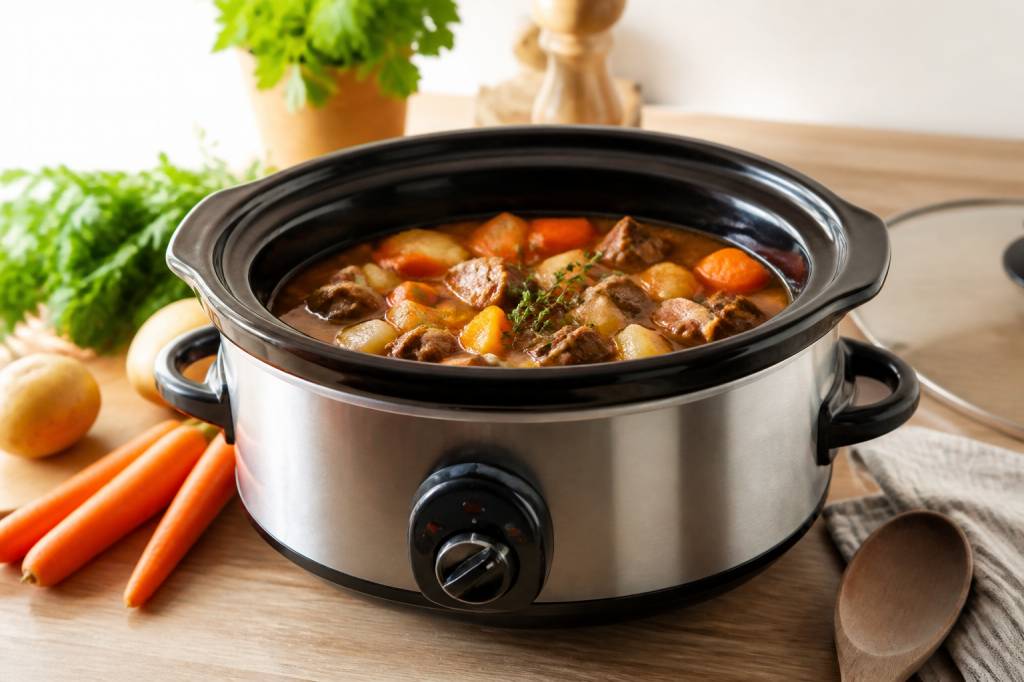
A slow cooker can turn a handful of everyday ingredients into a comforting, nutritious meal with very little hands-on effort. It is especially useful on busy weekdays: prepare everything in the morning, let the cooker do the work, and come home to dinner that is ready to serve.
But a slow cooker is not automatically a healthy-cooking machine. Creamy sauces, salty stock cubes and oversized portions can quickly change the nutritional balance of a dish. The good news is that a few simple habits make it easy to use your slow cooker for wholesome meals packed with vegetables, fibre and satisfying protein.
Here is how to get better results, avoid common mistakes and build simple slow cooker recipes for everyday eating.
Why slow cooking works so well for healthy meals
Slow cooking uses a low, steady heat over several hours. This gives tougher cuts of meat, pulses and root vegetables time to soften while their flavours develop. It also makes batch cooking remarkably practical.
There are several benefits to this style of cooking:
- It encourages home cooking. A prepared slow cooker meal can be more convenient than a takeaway when the day gets busy.
- It makes vegetables easy to include. Carrots, onions, peppers, tomatoes, squash and leafy greens can all find a place in the pot.
- It works well with pulses. Lentils, beans and chickpeas add plant protein and fibre at a relatively low cost.
- It can make economical ingredients tender. Lean stewing beef, chicken thighs and dried pulses become flavourful with time.
- It supports batch cooking. Leftovers can provide lunch or another dinner, provided they are cooled and stored safely.
Slow cooking also helps meals feel satisfying without relying on heavy sauces. Herbs, spices, garlic, ginger, citrus and good-quality stock can create plenty of flavour without a long list of ingredients.
Choose ingredients that build a balanced bowl
A useful slow cooker formula is simple: combine a source of protein, plenty of vegetables, a sensible amount of carbohydrate and enough liquid to create a tender, flavourful dish.
For protein, try chicken, turkey, lean beef, fish added near the end, tofu, lentils, chickpeas or beans. If using meat, trimming visible fat can help keep the dish lighter. Chicken thighs are more forgiving than chicken breast, but both can work when the cooking time and liquid are carefully managed.
Vegetables should make up a generous part of the meal. Firm vegetables such as carrots, parsnips, onions, celery and sweet potato can cook for several hours without losing their structure. Softer vegetables, spinach, peas, courgettes and fresh herbs are usually best added during the final 15 to 30 minutes.
For carbohydrates, consider pearl barley, brown rice, quinoa, potatoes or wholegrain bread served on the side. Not every slow cooker meal needs a starch in the pot. A bean and vegetable stew, for example, can be filling enough on its own.
Healthy slow cooker habits that improve every recipe
The difference between a good slow cooker meal and a bland or watery one often comes down to preparation. These practical habits are worth keeping nearby.
- Do not overfill the cooker. Aim to fill it between one-half and two-thirds full. Too much food may cook unevenly, while too little can dry out more quickly.
- Use less liquid than you would in a hob-top stew. Slow cookers lose very little moisture, so ingredients release their own juices. Add enough to prevent drying, but avoid automatically covering everything.
- Brown meat when you have time. Searing is not essential for food safety, but it adds deeper flavour and improves the finished texture.
- Layer thoughtfully. Put firm vegetables and meat near the bottom, where the heat is strongest, and add delicate ingredients later.
- Keep the lid closed. Each lift releases heat and extends the cooking time. A quick glance is tempting, but the aroma will still be there when dinner is ready.
- Season gradually. Stock, canned tomatoes and sauces can already contain salt. Taste at the end before adding more.
- Use herbs and spices generously. Smoked paprika, cumin, coriander, rosemary, thyme, chilli and garlic can bring complexity without added sugar or excess fat.
- Finish with freshness. Lemon juice, chopped parsley, coriander, spring onions or a spoonful of plain yoghurt can brighten a slow-cooked dish.
Food safety matters
Slow cookers are convenient, but safe handling is still essential. Start with fresh ingredients, wash produce properly and keep raw meat separate from ready-to-eat foods during preparation.
Frozen meat should be fully defrosted in the refrigerator before it goes into the slow cooker. Placing large frozen pieces directly into the cooker can leave them in an unsafe temperature range for too long. If you are cooking meat, check that it is thoroughly cooked before serving, ideally with a food thermometer.
When the meal is ready, do not leave leftovers sitting at room temperature for hours. Divide them into shallow containers, allow them to stop steaming, then refrigerate promptly. Eat refrigerated leftovers within a couple of days or freeze them in suitable portions. Reheat until piping hot throughout, and only reheat each portion once.
Easy slow cooker chicken, tomato and bean stew
This is a dependable weekday recipe: hearty, colourful and flexible. It works with chicken thighs for extra tenderness or skinless chicken breast for a leaner option.
Serves: 4
Cooking time: 6 to 7 hours on low, or 3 to 4 hours on high
Ingredients:
- 500g boneless, skinless chicken thighs or chicken breast
- 1 large onion, sliced
- 2 carrots, chopped
- 2 peppers, sliced
- 2 garlic cloves, finely chopped
- 1 x 400g tin chopped tomatoes
- 1 x 400g tin cannellini beans, drained and rinsed
- 250ml reduced-salt chicken stock
- 1 teaspoon smoked paprika
- 1 teaspoon dried oregano
- Black pepper, to taste
- Juice of half a lemon
- Fresh parsley, to serve
Method:
- Add the onion, carrots, peppers and garlic to the slow cooker.
- Place the chicken on top, then add the tomatoes, beans, stock, paprika, oregano and black pepper.
- Cover and cook until the chicken is thoroughly cooked and tender.
- Remove the chicken, shred it with two forks if desired, and return it to the pot.
- Stir through the lemon juice and finish with fresh parsley.
Serve with steamed greens, a small portion of brown rice or a slice of wholegrain bread. The beans already provide fibre and substance, so there is no need to pile the plate high with additional carbohydrates.
Simple lentil and vegetable curry
Lentils are one of the most useful slow cooker ingredients. They are affordable, filling and naturally rich in plant protein and fibre. This curry is warming without needing a jar of sugary sauce.
Serves: 4
Cooking time: 5 to 6 hours on low, or 3 to 4 hours on high
Ingredients:
- 250g dried red lentils, rinsed
- 1 onion, diced
- 2 carrots, chopped
- 1 small cauliflower, cut into florets
- 1 red pepper, chopped
- 2 garlic cloves, grated or finely chopped
- 1 tablespoon grated fresh ginger
- 1 x 400g tin chopped tomatoes
- 600ml vegetable stock
- 1 tablespoon mild curry powder
- 1 teaspoon ground cumin
- Half a teaspoon turmeric
- 100ml light coconut milk, added near the end
- Fresh coriander and lime wedges, to serve
Method:
- Place the lentils, onion, carrots, cauliflower, pepper, garlic and ginger in the slow cooker.
- Add the tomatoes, stock and spices, then stir well.
- Cover and cook until the lentils are soft and the vegetables are tender.
- Stir in the coconut milk during the final 20 minutes.
- Serve with coriander and a squeeze of lime.
For a lighter meal, serve it with steamed greens. If you need more energy, add a modest portion of brown rice. The curry can also be thickened with extra lentils rather than flour or cream.
Slow cooker vegetable soup with barley
Soup is one of the easiest ways to use a slow cooker, especially when the fridge contains several vegetables that need attention. Pearl barley adds a pleasantly chewy texture and makes the soup more substantial.
Serves: 5 to 6
Cooking time: 6 hours on low, or 3 to 4 hours on high
Ingredients:
- 1 onion, diced
- 2 carrots, chopped
- 2 celery sticks, chopped
- 1 leek, sliced
- 2 medium potatoes, diced
- 1 courgette, chopped
- 100g pearl barley, rinsed
- 1 x 400g tin chopped tomatoes
- 1.2 litres reduced-salt vegetable stock
- 1 teaspoon dried thyme
- 1 bay leaf
- Black pepper, to taste
- A handful of spinach, added at the end
Method:
- Add all the ingredients except the spinach to the slow cooker.
- Stir, cover and cook until the barley and vegetables are tender.
- Remove the bay leaf and stir through the spinach just before serving.
- Taste and adjust with black pepper, herbs or a little lemon juice.
Use whatever vegetables you have available, but remember that very soft ingredients may disappear into the soup. That is not a problem if you are aiming for a naturally thick texture, but add peas, greens or fresh herbs later if you want more definition.
How to make slow cooker meals more exciting
Eating the same stew three nights in a row can test anyone’s enthusiasm. A practical trick is to cook a neutral base and change the way you serve it.
- Turn leftover chilli into a filling for baked potatoes.
- Serve chicken stew over wholegrain toast or alongside a crunchy salad.
- Add extra stock to a thick bean mixture and create a quick soup.
- Use leftover shredded meat in wraps with lettuce, tomatoes and yoghurt.
- Top lentil curry with toasted seeds, fresh herbs or natural yoghurt.
Texture also matters. A slow-cooked dish can be soft throughout, so pair it with something fresh and crisp: shredded cabbage, cucumber, grated carrot or a simple apple and rocket salad. That contrast makes a modest meal feel far more complete.
Common slow cooker mistakes to avoid
Adding too much liquid is probably the most frequent error. Because evaporation is limited, a recipe can become watery and dilute. Begin conservatively; you can always add more liquid later if needed.
Another mistake is adding dairy too early. Milk, cream and yoghurt can split during long cooking. Stir them in near the end, or use a small amount of plain yoghurt as a topping instead.
Do not add delicate fish at the beginning unless the recipe specifically allows for it. Most fish needs only a short cooking time and can become dry or fall apart. Add fillets during the final 20 to 30 minutes, depending on thickness.
Finally, resist the urge to treat every recipe as interchangeable. A slow cooker is excellent for stews, soups, curries and braises, but it is not ideal for everything. Pasta, rice and fresh greens often need separate cooking or late addition to retain a better texture.
A little planning makes healthy eating easier
Before using the slow cooker, spend five minutes checking the recipe, chopping the vegetables and measuring the liquid. This small preparation prevents rushed substitutions and makes it more likely that the meal will happen as planned.
Keep a few useful ingredients in the cupboard: tinned tomatoes, beans, lentils, reduced-salt stock, pearl barley and spices. Add onions, carrots and seasonal vegetables from the fridge, and you already have the foundations of several nourishing meals.
The best slow cooker recipe is not necessarily the most elaborate one. It is the meal that fits your routine, contains ingredients you enjoy and leaves you with something satisfying at the end of a busy day. With sensible portions, plenty of vegetables and careful seasoning, slow cooking can make healthy everyday eating considerably easier.