Best spaghetti sauces for healthy, flavourful meals at home
Spaghetti is one of those rare meals that can be comforting, affordable and genuinely nutritious at the same time. The secret is usually not the pasta itself, but the sauce. A good sauce brings vegetables, herbs, healthy fats and satisfying flavour to the plate without relying on excessive sugar, salt or cream.
Whether you are cooking for a busy weeknight, feeding a family or simply trying to make healthier meals more enjoyable, the right spaghetti sauce can do most of the work. Here are some of the best sauces to make at home, along with practical tips for choosing better ingredients and building more flavour.
What makes a spaghetti sauce healthy?
A healthy sauce does not need to be bland, complicated or made from a long list of specialist ingredients. In most cases, the best options are based on whole foods: tomatoes, vegetables, pulses, herbs, spices, nuts, seeds and quality oils.
When choosing or preparing a sauce, look for a balance of:
- Vegetables: Tomatoes, onions, garlic, peppers, carrots, mushrooms and leafy greens all add nutrients and natural flavour.
- Protein: Lentils, beans, lean meat, fish, tofu or Greek yoghurt can make a sauce more filling.
- Healthy fats: Extra virgin olive oil, nuts, seeds and avocado help create a satisfying texture.
- Fibre: Pulses and vegetables support digestion and help keep you fuller for longer.
- Flavour: Fresh herbs, spices, citrus, vinegar and Parmesan can make a simple sauce taste far more exciting.
It is also worth checking the label when buying a jarred sauce. A shorter ingredient list is not always automatically better, but watch for large amounts of added sugar, salt and highly processed oils. A useful rule is to choose a sauce where tomatoes or vegetables are near the top of the ingredient list.
Classic tomato and garlic sauce
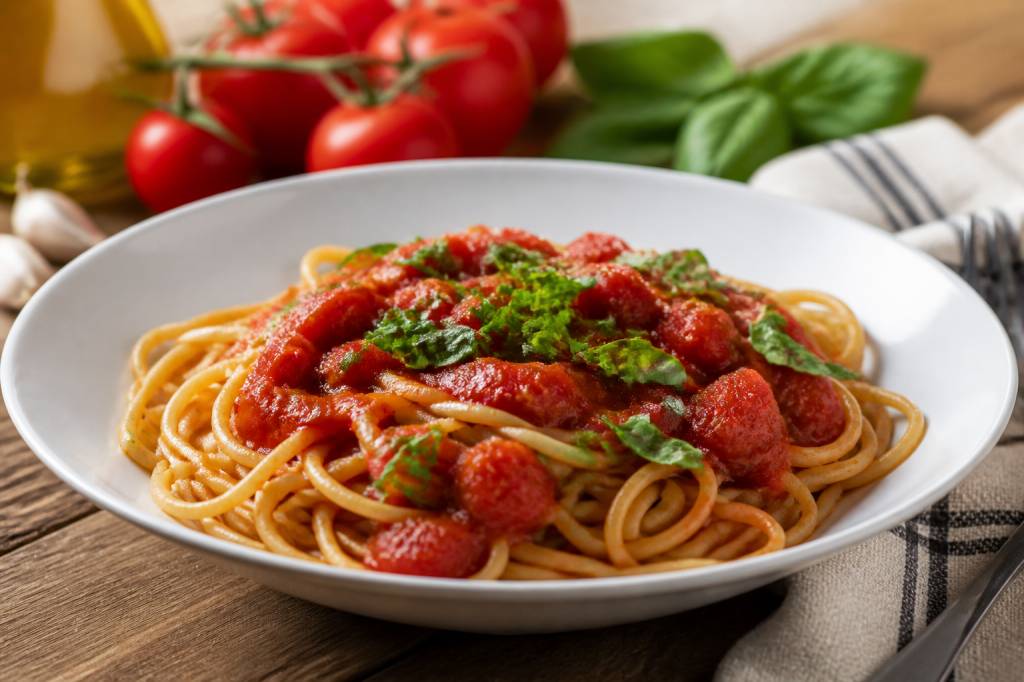
A simple tomato sauce is one of the most useful recipes to have in your kitchen. It works with spaghetti, meatballs, baked pasta, vegetables and even toasted sourdough. More importantly, it can be made in about 20 minutes.
Start by gently cooking chopped onion in extra virgin olive oil. Add sliced garlic once the onion has softened, then stir in tinned chopped tomatoes or passata. Season with black pepper, dried oregano and a small pinch of chilli flakes. Let everything simmer until the sauce thickens and the flavour becomes rounded.
For extra depth, add a splash of balsamic vinegar or red wine vinegar near the end. A little acidity lifts the tomatoes and prevents the sauce from tasting flat. Fresh basil stirred through just before serving adds a bright, summery finish.
- Use tinned plum tomatoes for a richer texture.
- Add grated carrot if you want natural sweetness without sugar.
- Blend the sauce for a smooth finish, or leave it chunky for more texture.
- Reserve a little pasta water to loosen the sauce before serving.
This is also an excellent batch-cooking recipe. Make a double portion, allow it to cool and store it in the fridge for up to three days. It can also be frozen in individual portions, ready for the next time dinner needs to happen quickly.
Roasted red pepper and tomato sauce
Roasting vegetables transforms their flavour. Red peppers become sweet and smoky, while tomatoes develop a deeper, more concentrated taste. This sauce is ideal if you want something that feels a little more special without adding much extra effort.
Place halved red peppers, tomatoes, onion and garlic on a baking tray. Drizzle with olive oil and roast until the edges are lightly charred. Blend the vegetables with smoked paprika, black pepper and a squeeze of lemon juice. The result is a silky sauce with plenty of flavour and no need for cream.
For a more substantial meal, add white beans or chickpeas to the finished sauce. They provide fibre and plant-based protein, and their mild flavour works beautifully with the sweet peppers. A handful of spinach can also be stirred through just before serving.
If you prefer a smoother sauce, remove the pepper skins after roasting. If you are short on time, leave them on. The texture will be slightly more rustic, but the flavour will still be excellent. Rustic is often just another word for “fewer dishes to wash”.
Lentil bolognese
Lentil bolognese is a dependable choice when you want a hearty spaghetti meal without relying on minced meat. Lentils absorb the flavour of the sauce while adding fibre, protein and a satisfying texture.
Cook onion, carrot and celery in olive oil until soft. Add garlic, mushrooms and dried oregano, then stir in tomato purée, tinned tomatoes and vegetable stock. Green or brown lentils work particularly well because they hold their shape during cooking. Simmer until the lentils are tender and the sauce has thickened.
A small amount of soy sauce or tamari adds savoury depth. You can also add a teaspoon of miso paste, provided you adjust the salt because both ingredients are naturally high in sodium. Finish with fresh parsley or basil and a little grated Parmesan, if desired.
This sauce is particularly good for meal preparation. It keeps well in the fridge and often tastes even better the following day, once the herbs and spices have had time to develop. Serve it with wholewheat spaghetti or a pulse-based pasta for an especially fibre-rich meal.
Vegetable-packed hidden sauce
Some people love vegetables. Others tolerate them more enthusiastically when they are blended into a delicious sauce. A hidden vegetable sauce is useful for families, picky eaters or anyone who wants to increase their daily vegetable intake without preparing a separate side dish.
Cook onion, garlic, carrots, courgette, red pepper and tomatoes until soft. Blend the mixture until smooth, then season with basil, oregano and black pepper. You can add a little vegetable stock if the sauce is too thick.
The aim is not to disguise vegetables completely, but to create a naturally sweet, creamy texture without cream. For extra richness, blend in a spoonful of ricotta, cottage cheese or white beans. These ingredients add protein and make the sauce more filling.
Different vegetables can be used depending on what is available. Pumpkin, butternut squash, cauliflower and spinach all work well. This makes the recipe a practical way to use up produce that is approaching its best.
Creamy spinach and ricotta sauce
If you enjoy creamy pasta sauces but want a lighter alternative to double cream, ricotta is worth trying. It gives the sauce a smooth, comforting texture while providing protein and less saturated fat than many traditional cream-based recipes.
Wilt fresh spinach with garlic and olive oil, then blend it with ricotta, lemon zest, black pepper and a small amount of pasta water. Toss the sauce with hot spaghetti so that it coats every strand. Add peas or broad beans for extra colour and fibre.
Do not overlook the lemon. Its acidity cuts through the richness of the ricotta and makes the spinach taste fresher. A little nutmeg can also add warmth, although it is best used sparingly.
This sauce is best served immediately because ricotta can become thicker as it cools. If it needs loosening, add another splash of pasta water rather than more oil.
Walnut and herb pesto
Pesto is traditionally made with basil, pine nuts, Parmesan, garlic and olive oil. It is full of flavour, but pine nuts can be expensive and shop-bought versions may contain more oil and salt than expected. A homemade walnut pesto is an affordable and nutritious alternative.
Blend fresh basil, walnuts, garlic, Parmesan, lemon juice and olive oil until you have a textured paste. Toss it with spaghetti and enough pasta water to create a glossy sauce. The walnuts provide omega-3 fats and a slightly earthy flavour that pairs well with basil.
You can vary the recipe with rocket, parsley, coriander or spinach. Pumpkin seeds and sunflower seeds are useful nut-free options. For a dairy-free pesto, replace Parmesan with nutritional yeast or a small amount of white miso.
Pesto is quite concentrated, so a little goes a long way. Start with a modest amount and add more if needed. You can also stir it into tomato sauce, spread it on roasted vegetables or use it as a dressing for a warm grain salad.
Spicy tomato and tuna sauce
For a quick source of protein, tuna can turn a simple tomato sauce into a complete and satisfying meal. Cook garlic and chilli flakes in olive oil, add chopped tomatoes and simmer for 10 to 15 minutes. Stir through drained tuna and finish with parsley, lemon zest and black pepper.
Choose tuna packed in spring water or olive oil, depending on your preference. If using tuna in oil, drain it well and reduce the amount of additional oil in the recipe. Olives and capers add a salty, savoury flavour, but use them carefully if you are watching your salt intake.
For a more sustainable seafood choice, vary the fish you eat and check the sourcing information on the packaging. Sardines, mackerel and salmon can also work in tomato-based sauces and provide useful omega-3 fats.
How to make any sauce taste better
A healthy sauce can still be deeply satisfying. The most common mistake is adding ingredients without allowing enough time for flavour to develop. A few basic techniques make a noticeable difference.
- Soften the aromatics: Cook onions slowly until tender before adding tomatoes or stock.
- Toast spices: Warm dried spices briefly in oil to release their aroma.
- Use pasta water: The starch helps the sauce cling to the spaghetti and creates a smoother finish.
- Add acidity: Lemon juice, vinegar or a little wine can brighten heavy or overly sweet sauces.
- Finish with herbs: Add delicate fresh herbs at the end so their flavour remains fresh.
- Season gradually: Taste as you cook instead of adding a large amount of salt at once.
It is also worth mixing the pasta and sauce in the pan for a minute or two. Pouring sauce over plain spaghetti may look convenient, but tossing everything together allows the sauce to coat the pasta properly. This small step makes the meal feel much more polished.
Choosing the right spaghetti
The sauce is important, but the pasta matters too. Wholewheat spaghetti generally contains more fibre than white pasta and has a pleasantly nutty flavour. If you are not used to it, try mixing half wholewheat pasta with half regular pasta, then gradually increase the proportion.
Pulses-based pasta made from chickpeas, lentils or peas can provide more protein and fibre. It tends to have a firmer, slightly different texture, so it works particularly well with robust sauces such as lentil bolognese or roasted pepper sauce.
Whatever type you choose, cook the spaghetti until al dente. This means it should be tender but still have a little bite. Overcooked pasta can become soft and less satisfying, while al dente pasta is more enjoyable and holds its shape better when tossed with sauce.
Simple toppings that add nutrition and flavour
A few carefully chosen toppings can transform a bowl of spaghetti. Try toasted seeds, chopped walnuts, fresh herbs, chilli flakes or a spoonful of plain Greek yoghurt. Nutritional yeast adds a savoury, cheesy note without dairy.
Roasted vegetables are another easy addition. Courgette, broccoli, aubergine and mushrooms can be cooked alongside your main meal and added at the table. This increases the volume and nutritional value of the dish without making the sauce complicated.
Finally, remember that a healthy meal does not have to follow a perfect formula. A bowl of spaghetti with a flavourful homemade sauce, a generous serving of vegetables and sensible portion of cheese can fit comfortably into a balanced diet. The best sauce is the one you enjoy making and will happily eat again.