Chick pea flour tortillas: a healthy, gluten-free recipe for everyday meals
Some recipes earn a permanent place in your kitchen because they are quick, affordable and genuinely useful. These chickpea flour tortillas are exactly that kind of recipe. Made with just a handful of everyday ingredients, they are naturally gluten-free, rich in plant protein and easy to adapt to whatever is waiting in the fridge.
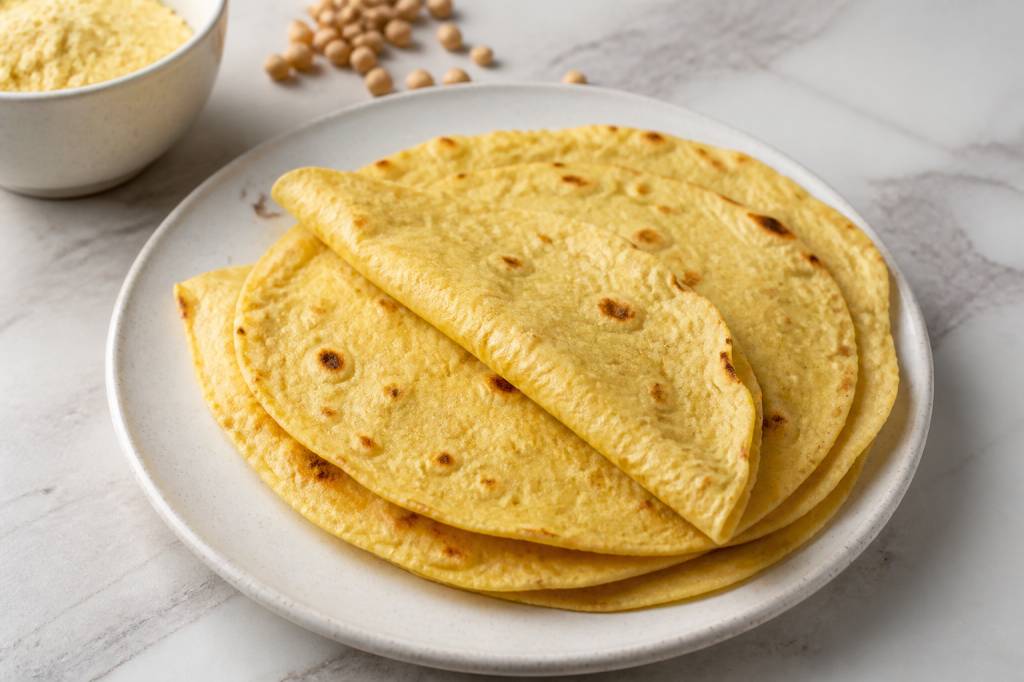
Unlike traditional wheat tortillas, these wraps are made with gram flour, also called chickpea flour or besan. The result is a soft, savoury flatbread with a gentle nutty flavour. They work beautifully for tacos, lunch wraps, breakfast rolls and simple snacks.
There is no kneading, yeast or complicated equipment involved. Mix the batter, leave it to rest briefly, then cook it in a hot pan. If you can make a pancake, you can make these tortillas. The first one may be slightly experimental, but that is part of the process—and it is still perfectly edible.
Why make tortillas with chickpea flour?
Chickpea flour is made by grinding dried chickpeas into a fine powder. It has a naturally creamy colour and a more substantial flavour than many grain-based flours. Most importantly, it brings useful nutrition to a simple wrap.
Chickpea flour is also a practical shopping choice. One bag can be used for pancakes, fritters, socca, pakoras and thickening savoury batters, so it is unlikely to become a forgotten ingredient at the back of the cupboard.
What you need
This recipe makes approximately six medium tortillas, depending on the size of your frying pan and how thinly you spread the batter.
For extra flavour, you can add ½ teaspoon garlic powder, a pinch of smoked paprika, dried oregano, chopped parsley or a little chilli powder. Keep the basic batter simple for your first attempt, then customise it once you know how it behaves in the pan.
How to make chickpea flour tortillas
Mix the dry ingredients. Add the chickpea flour, salt, cumin and black pepper to a bowl. Stir well to distribute the seasoning. This small step prevents salty or strongly spiced patches in the finished tortillas.
Add the water gradually. Pour in the water a little at a time while whisking. Chickpea flour can form stubborn lumps, so avoid tipping all the liquid in at once. Continue whisking until the mixture is smooth and similar in consistency to a thin pancake batter.
Stir in the oil. Add the tablespoon of olive oil and whisk again. The oil gives the tortillas a softer texture and adds a little richness without making the batter heavy.
Let the batter rest. Leave it for 15 to 20 minutes. This allows the flour to hydrate properly and helps produce a smoother, more cohesive tortilla. If the batter thickens too much during resting, add one or two tablespoons of water.
Heat the pan. Place a non-stick frying pan or well-seasoned cast-iron skillet over medium heat. Add a very small amount of oil and spread it across the surface. The pan should be hot enough for the batter to begin setting quickly, but not so hot that the edges burn before the centre cooks.
Cook the tortillas. Pour approximately ¼ cup of batter into the pan and immediately swirl or spread it into a thin circle. Cook for around 60 to 90 seconds, until the top looks mostly set and the edges begin to lift.
Flip carefully with a wide spatula and cook the other side for another 30 to 60 seconds. Transfer the tortilla to a plate and cover it with a clean tea towel. This traps a little steam and helps keep the tortillas flexible.
Repeat with the remaining batter, adding a tiny amount of oil to the pan only when necessary. Give the batter a quick stir between tortillas, as chickpea flour can settle at the bottom of the bowl.
Getting the texture right
The ideal batter should be pourable but not watery. Think of single cream or a thin pancake batter. If it is too thick, the tortillas will be dense and difficult to spread. If it is too thin, they may tear when flipped.
Chickpea flour tortillas are usually more delicate than wheat tortillas, particularly while they are hot. The key is to spread the batter thinly and allow the first side to cook thoroughly before attempting to flip it. A rushed flip is the most common cause of breakage.
If your first tortilla cracks, do not immediately add more flour. It may simply need another 20 or 30 seconds in the pan. If several tortillas are breaking, whisk one tablespoon of chickpea flour into the batter and let it rest for a few minutes before trying again.
For softer tortillas, keep them covered as they cool. For a slightly crisp edge, cook them for an extra 30 seconds. They can be made larger for wraps or smaller for appetisers and lunchbox-friendly mini tacos.
Easy flavour variations
The basic recipe is a useful blank canvas. You can change the character of the tortillas without changing the method.
For a breakfast version, leave out the cumin and pepper and add a little chopped chive. Serve with scrambled eggs, avocado and tomatoes. Chickpea flour has enough flavour to make even a simple filling feel satisfying.
Everyday meal ideas
These tortillas are most useful when treated as a flexible base rather than a special-occasion recipe. They can turn leftovers into a proper meal in minutes.
For a quick lunch, fill one with hummus, grated carrot, cucumber, roasted peppers and leafy greens. Add a spoonful of plain yoghurt or tahini dressing for creaminess. The combination of chickpea flour and hummus creates a particularly satisfying plant-based wrap.
For a simple dinner, use the tortillas as tacos. Add spiced black beans, shredded cabbage, tomato salsa and avocado. A little lime juice brings everything together, while toasted pumpkin seeds add crunch.
Leftover roasted vegetables are another excellent filling. Try sweet potato, courgette, red onion and aubergine with a spoonful of yoghurt, feta or a dairy-free alternative. The slightly nutty tortilla works especially well with caramelised vegetables.
You can also use them for breakfast. Fill a warm tortilla with scrambled eggs, sautéed spinach and a little grated cheese. Or try mashed avocado, boiled egg and chilli flakes for a quick meal that requires very little preparation.
For a lighter snack, cut cooked tortillas into wedges and crisp them in a dry pan or oven. Serve with salsa, guacamole or a white bean dip. They may not survive long once placed on the table, so make a few extra.
How to store and reheat them
Allow the tortillas to cool completely before storing. Place baking parchment between them to prevent sticking, then keep them in an airtight container in the refrigerator for up to three days.
To reheat, warm each tortilla in a dry frying pan for 20 to 30 seconds per side. You can also microwave them briefly under a slightly damp kitchen towel. Avoid overheating, as this can make them dry and brittle.
They can be frozen too. Separate each tortilla with parchment, place them in a freezer-safe container or bag, and freeze for up to two months. Defrost them in the refrigerator or reheat gently from frozen in a covered pan.
Common problems and simple fixes
The batter is lumpy: Whisk vigorously, or pass the mixture through a sieve. A stick blender can also help, although a hand whisk is usually enough.
The tortillas stick: Your pan may not be hot enough, or it may need a light coating of oil. A good non-stick pan makes the process much easier.
The edges are burning: Reduce the heat slightly. Chickpea flour cooks quickly around the edges, especially when the batter is spread thinly.
The tortillas are too thick: Add a splash of water and use less batter for each tortilla. Swirl the pan immediately after pouring.
They taste bitter: Chickpea flour can taste unpleasant when undercooked. Cook the tortillas until the centre is fully set and lightly golden in places.
They are too fragile for wrapping: Make them slightly thicker, allow them to cool under a tea towel and avoid overcooking. A little extra oil in the batter can also improve flexibility.
A note about gluten-free cooking
Chickpea flour itself does not contain gluten, making it suitable for gluten-free cooking. However, if you are preparing food for someone with coeliac disease or a serious gluten intolerance, check the packaging carefully and look for certified gluten-free flour.
Cross-contamination can happen during milling, packaging or storage. Use clean utensils, a separate cooking surface where appropriate and fillings that are also verified as gluten-free. A naturally gluten-free ingredient is not always the same thing as a certified gluten-free product.
Why this recipe deserves a place in your routine
Good everyday food does not need to be complicated. These chickpea flour tortillas are quick enough for a weekday lunch, adaptable enough for leftovers and nourishing enough to form part of a balanced meal. They also make it easier to add more pulses to your diet without preparing a pot of beans from scratch.
Keep a bag of chickpea flour in the cupboard, and you are never far from a warm, savoury wrap. Once you are comfortable with the basic method, experiment with herbs, spices and different fillings. The recipe is forgiving, economical and practical—the sort of kitchen staple that quietly earns its keep.