Coconut and pineapple ice cream: a refreshing dairy-free recipe
When the weather turns warm, few things are more satisfying than a scoop of ice cream. The trouble is that many shop-bought versions are rich in dairy, added sugar and ingredients that are difficult to identify. This coconut and pineapple ice cream offers a fresher alternative: creamy, tropical and completely dairy-free.
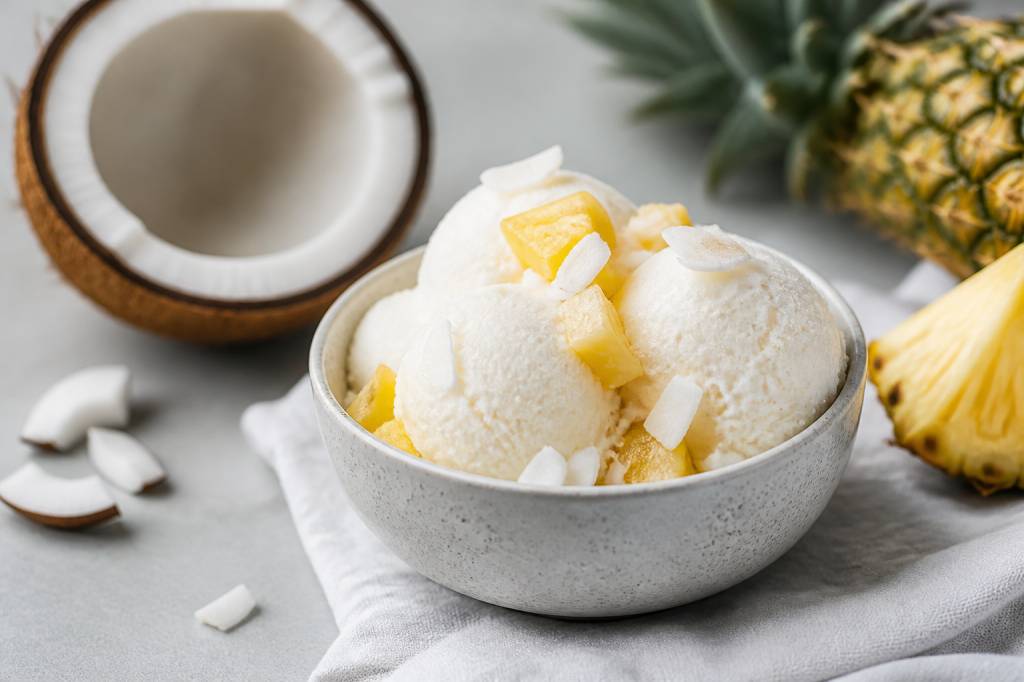
It is made with coconut milk, frozen pineapple, lime and a little maple syrup. There is no need for an ice-cream machine, and the preparation is simple enough for a weekday dessert. The result sits somewhere between soft-serve ice cream and a tropical sorbet, with enough richness from the coconut to keep every spoonful smooth.
Think of it as sunshine in a bowl. The pineapple brings natural sweetness and a gentle sharpness, while coconut milk adds body without using cream or cow’s milk. A squeeze of lime keeps the flavour lively rather than overly sweet.
Why coconut and pineapple work so well together
Coconut and pineapple are a classic pairing for good reason. Pineapple has a bright, juicy acidity, while coconut is mellow, creamy and slightly nutty. Together, they create balance: the fruit keeps the coconut from feeling heavy, and the coconut softens the sharper edges of the pineapple.
There is also a useful textural advantage. Frozen pineapple blends into a thick, smooth base, while full-fat coconut milk contributes enough fat to create a more ice-cream-like mouthfeel. You will not need eggs, cream or a complicated custard.
For the best flavour, use ripe pineapple if you have one available. That said, frozen pineapple is often the most practical option. It is picked at peak ripeness, already prepared and available all year round. It also means this recipe can be made without waiting for a pineapple to soften on the kitchen counter.
Ingredients you will need
- 500g frozen pineapple chunks – use prepared frozen pineapple for speed, or freeze fresh pineapple in chunks.
- 400ml full-fat coconut milk – choose a can with a high coconut content for the creamiest result.
- 2 tablespoons pure maple syrup – adjust according to the sweetness of your pineapple.
- 1 tablespoon fresh lime juice – this brightens the flavour and balances the sweetness.
- 1 teaspoon finely grated lime zest – optional, but excellent for a more aromatic finish.
- ½ teaspoon vanilla extract – optional and useful if you prefer a softer, dessert-style flavour.
- A small pinch of sea salt – just enough to bring the tropical flavours into focus.
Before you begin, place the can of coconut milk in the fridge for several hours, or overnight if possible. Chilling helps separate the thicker coconut cream from the watery liquid. You can use the whole can in the recipe, but the thickened portion will make the texture richer.
How to make coconut and pineapple ice cream
1. Prepare the pineapple. If you are using fresh pineapple, remove the skin and tough core, then cut the flesh into small chunks. Arrange the pieces in a single layer on a lined baking tray and freeze for at least four hours. Freezing the pineapple separately prevents it from forming one solid block.
2. Add the ingredients to a blender. Place the frozen pineapple, coconut milk, maple syrup, lime juice, lime zest, vanilla and salt into a high-powered blender or food processor. Start with a smaller amount of coconut milk if your blender is powerful; you can add more gradually as needed.
3. Blend until smooth. Blend in short bursts, stopping to scrape down the sides. The mixture will look thick at first. Resist the temptation to add lots of liquid immediately. A little patience will give you a thicker, more scoopable texture.
4. Taste and adjust. Once smooth, taste the mixture. Add another teaspoon of maple syrup if the pineapple is particularly tart, or a little extra lime juice if the flavour needs more lift. A pinch more salt can also make a surprising difference.
5. Serve immediately or freeze. For a soft-serve consistency, spoon the ice cream into bowls straight away. If you prefer firm scoops, transfer it to a shallow, freezer-safe container, cover the surface and freeze for two to three hours.
If the ice cream is frozen overnight, leave it at room temperature for 15 to 25 minutes before serving. Homemade ice cream becomes very firm in a domestic freezer because it contains less sugar and fewer stabilisers than commercial products. A short rest makes scooping much easier.
The blender method versus the freezer method
This recipe is designed for a blender or food processor, but there are two useful ways to finish it depending on the texture you want.
- For instant soft-serve: use plenty of frozen pineapple and just enough coconut milk to blend everything into a thick purée. Serve straight away.
- For firmer ice cream: blend the ingredients until smooth, transfer to a shallow container and freeze for two to three hours.
- For a smoother frozen texture after longer freezing: stir the mixture once or twice during the first two hours. This helps break up ice crystals.
- For an ice-cream-machine finish: chill the blended mixture thoroughly, then churn according to the manufacturer’s instructions.
A shallow container is preferable to a deep tub because the mixture freezes more evenly and is easier to scoop. Pressing a piece of baking paper directly onto the surface can also reduce ice crystals.
Practical tips for a creamy result
Use full-fat coconut milk. Reduced-fat coconut milk contains more water and generally produces a harder, icier dessert. It can work in a pinch, but full-fat is the better choice for a creamy consistency.
Do not overdo the liquid. The blender needs enough moisture to keep moving, but adding too much coconut milk turns the mixture into a smoothie. Add it gradually, especially if your pineapple has started to soften.
Freeze the fruit properly. Spread the pineapple pieces out rather than piling them into a container. This gives you separate pieces that are easier for the blades to process.
Chill your serving bowls. This small step helps the ice cream hold its texture for longer, particularly on a warm day.
Use a sturdy spatula. Thick frozen mixtures can put pressure on a small food processor. Stop regularly, scrape down the sides and allow the machine to rest if it begins to heat up.
Keep the lime balanced. Lime should add freshness, not dominate the dessert. Pineapple varies considerably in sweetness and acidity, so tasting is more reliable than following the measurement blindly.
Easy variations to try
The basic recipe is deliberately simple, but it is also a useful base for experimenting. You can change the flavour without changing the method.
- Mango and pineapple: replace half of the pineapple with frozen mango for a softer, sweeter tropical flavour.
- Coconut and passion fruit: swirl pulp from two passion fruits through the blended ice cream before freezing.
- Ginger and lime: add ½ teaspoon of finely grated fresh ginger for a warm, aromatic note.
- Mint pineapple: blend in a small handful of fresh mint leaves, then garnish with extra mint.
- Toasted coconut: scatter unsweetened toasted coconut flakes over each serving for added texture.
- Berry tropical ice cream: blend in a handful of frozen raspberries for colour and a sharper berry flavour.
- Chocolate contrast: add a few tablespoons of cacao nibs after blending, so they remain slightly crunchy.
If you are serving children, the ginger and lime versions can be adjusted to suit milder palates. For adults, a small splash of white rum can create a piña-colada-inspired dessert, although it is best added sparingly because alcohol can make the ice cream softer.
Is this ice cream healthy?
This recipe is dairy-free and contains fruit, but it is still a dessert. Coconut milk is naturally creamy because it contains fat, and maple syrup contributes added sugar. The sensible approach is to enjoy it as part of a balanced diet rather than treating the words “dairy-free” or “natural” as a guarantee that a food is low in calories.
There are, however, some practical advantages. You control the amount of sweetener, the ingredient list is short and the recipe contains no artificial colours or complicated stabilisers. The pineapple also provides fibre and vitamin C, although the exact nutritional content will depend on the fruit, coconut milk and portion size.
For a less sweet version, start with one tablespoon of maple syrup and taste before adding more. If your pineapple is very ripe, you may find that no additional sweetener is needed at all. Remember that freezing dulls sweetness slightly, so a mixture that tastes perfectly sweet before freezing may taste less sweet once chilled.
Choosing the best ingredients when shopping
When buying coconut milk, look for full-fat varieties with coconut extract or coconut milk near the top of the ingredient list. Some products contain added sugar, emulsifiers or a high proportion of water. These are not necessarily unsuitable, but a simpler product gives you more control over the finished recipe.
For frozen pineapple, check the pack for added sugar or syrup. Plain frozen fruit is all you need. If you are buying a fresh pineapple, look for one with a sweet aroma at the base and golden skin. It should feel firm but yield slightly when pressed. A very hard pineapple may need more time to ripen, while a soft or fermented smell suggests that it has passed its best.
Maple syrup can be replaced with agave syrup or a few soft dates. If using dates, soak one or two pitted dates in hot water for 10 minutes, drain them well and blend thoroughly. This will add a subtle caramel note, although the ice cream may be slightly darker.
Serving ideas for a simple dessert
This ice cream is refreshing enough to serve on its own, but a few toppings can make it feel more special. Try toasted coconut, chopped pistachios, fresh pineapple, lime zest or a scattering of cacao nibs. For contrast, serve it with a crisp biscuit or a small piece of homemade banana bread.
You can also turn it into a quick tropical sundae. Add a scoop to a glass, layer with fresh berries and spoon over a little coconut yoghurt. Finish with lime zest and toasted coconut. It looks impressive, but the preparation takes only a few minutes.
For breakfast-style portions, serve a small scoop alongside a bowl of porridge or overnight oats. The combination of warm oats and cold pineapple ice cream is unexpectedly enjoyable, particularly when topped with nuts and seeds.
Storage and make-ahead advice
Store the ice cream in an airtight, freezer-safe container for up to two weeks for the best texture. It will remain safe to eat for longer, but ice crystals tend to become more noticeable over time, especially in a recipe without commercial stabilisers.
Keep the container towards the back of the freezer, where the temperature is more stable. Avoid repeatedly taking it out and leaving it to soften before returning it to the freezer, as this can encourage larger ice crystals to form.
If the texture becomes too firm, do not microwave the entire container. Let it stand at room temperature, then scoop only what you need. This preserves the texture of the remaining ice cream and prevents uneven melting.
A refreshing dessert with very little effort
Coconut and pineapple ice cream is a useful recipe to keep in your back pocket. It makes the most of frozen fruit, needs no dairy and can be ready in minutes when served as soft-serve. With a little extra freezing time, it becomes a firm, scoopable dessert that is ideal for warm evenings, family gatherings or a mid-afternoon treat.
The recipe is flexible, too. Adjust the sweetness, add ginger or mint, fold through toasted coconut, or use mango and berries to suit what you already have in the kitchen. The important thing is to use full-fat coconut milk, keep the added liquid under control and taste the mixture before freezing.
So, when you have a bag of frozen pineapple waiting in the freezer, skip the complicated dessert. Blend it with coconut milk, lime and a little maple syrup, and let the fruit do most of the work.